
When a tooth becomes infected at its root tip, despite having already had root canal treatment, apical surgery is often the procedure that saves it. At DRA Dental Clinic in Antalya, Turkey, the operation costs up to 70% less than at a UK private specialist, and most patients complete their treatment and return home within three to five days.
This page explains what apical surgery involves, how it differs from root canal retreatment, what recovery looks like when you are travelling from the UK, and how to find out whether it is the right option for your tooth.
Key Takeaways
- Apical surgery (apicoectomy) removes infected tissue at the root tip of a tooth that has not responded to root canal treatment or retreatment
- The procedure is completed under local anaesthesia in a single appointment at DRA Dental Clinic in Antalya, Turkey
- Recovery involves 2–5 days of manageable swelling; most UK patients fly home 3–5 days after treatment
- Apical surgery in Turkey costs up to 70% less than at a UK private dentist or specialist endodontist
- Send us your X-rays via WhatsApp before you travel, our dental team will confirm whether apical surgery is the right approach at no charge
What Is Apical Surgery (Apicoectomy)?
Apical surgery, also known as apicoectomy or root-end resection, is a minor surgical procedure that removes the very tip of a tooth’s root (the apex) together with any infected or inflamed tissue surrounding it. The root end is then sealed with a small filling to prevent bacteria from re-entering.
The procedure is used when a tooth has already had root canal treatment but continues to harbour infection at the root tip. In many of these cases, the infection exists in an area that cannot be reached through the crown of the tooth, because the canal is calcified, the root anatomy is complex, or an existing crown or post makes retreatment through the top of the tooth impractical.
Apical surgery is performed on a tooth that still has a viable root and adequate structure to be worth preserving. It is not the same as a tooth extraction, and it is not the automatic first response when a root canal has problems, in many situations, root canal retreatment should be considered first.
Apical Surgery vs Root Canal Retreatment: Which Do You Need?
If your root canal has failed or an infection has returned, the two main options are retreatment of the original root canal or apical surgery. They address different problems, and the right choice depends on what is causing the persistent infection.
Root canal retreatment involves re-entering the tooth through the crown, removing the existing canal filling, cleaning the system again, and re-sealing it. This is usually the preferred first approach when the original treatment was incomplete or when bacteria have re-entered through a leaking restoration.
Apical surgery is indicated when:
– Root canal retreatment has already been attempted without resolving the infection
– The canals are calcified and cannot be safely accessed from above
– The infection is localised to the root tip and is not related to the canal system higher up
– A cyst has formed around the root apex and needs to be physically removed
– A crown, bridge, or post makes re-entry through the crown impractical without destroying a costly restoration
– A tissue biopsy is needed to identify the nature of a lesion at the root tip
In some cases, both procedures are needed in sequence: retreatment first, followed by apical surgery if infection at the apex persists. Our dental team in Antalya will assess your panoramic X-ray and full clinical history to recommend the most appropriate approach, and will explain the reasoning before any treatment is planned.
Who Is a Candidate for Apical Surgery in Antalya?
Apical surgery may be the right option if you have:
- Persistent infection or abscess at the root tip after root canal treatment that has not resolved despite retreatment or antibiotics
- A calcified or blocked canal that cannot be negotiated safely from the crown
- A cyst at the root apex requiring surgical removal rather than canal-based treatment
- An existing crown, bridge, or post that makes root canal retreatment impractical without removing the restoration
- A crack or fracture limited to the root tip where surgical removal of the affected area can preserve the rest of the tooth
- An uncertain periapical lesion where a biopsy is needed to determine the tissue type
Apical surgery is not appropriate for all cases. If the tooth has a deep vertical fracture through the main root body, extensive bone loss, or insufficient remaining structure to support a crown after surgery, extraction followed by a dental implant is often the more reliable long-term solution. Our dental team will advise honestly if this applies to your case.
The Apical Surgery Procedure at DRA Dental Clinic, Antalya
The procedure is carried out under local anaesthesia in a single appointment. Here is what to expect step by step.
Step 1: Assessment and treatment planning
Our dental team begins with a panoramic X-ray to evaluate the root structure, extent of infection or cyst, and condition of the surrounding bone. This confirms whether apical surgery is the right treatment and determines the surgical approach for your tooth.
Step 2: Local anaesthesia
The area around the affected tooth is fully numbed before any work begins. You will feel pressure during the procedure but not pain. For patients with anxiety about dental treatment, sedation options are available at DRA Dental Clinic in Antalya.
Step 3: Gum incision and access
A small incision is made in the gum near the root tip. The gum tissue is gently moved aside to expose the bone and the apex of the root beneath.
Step 4: Root-end resection
The tip of the root, typically around 3 mm, is removed using a fine surgical instrument. Any infected tissue, abscess material, or cystic lesion surrounding the apex is cleaned from the area at the same time.
Step 5: Root-end preparation and sealing
A small cavity is prepared in the exposed root end using an ultrasonic tip. This is filled with a biocompatible sealing material, typically mineral trioxide aggregate (MTA), to close the canal and prevent bacteria from re-entering the root system at the apex.
Step 6: Suturing and aftercare
The gum tissue is repositioned and sutured. Our dental team provides clear aftercare instructions covering diet, oral hygiene, pain management, and what to watch for during recovery. Sutures are removed at a follow-up appointment five to seven days later.
The full procedure typically takes 60–90 minutes, depending on the root anatomy and complexity of the case.
Apical Surgery Recovery: What to Expect
Recovery is manageable for most patients, but if you are travelling from the UK to Antalya for this procedure, knowing the day-by-day timeline helps you plan your trip realistically.
Days 1–2: Swelling and some bruising around the cheek and jaw are normal and expected. Swelling typically peaks at around 48 hours before beginning to reduce. Pain is well controlled with standard over-the-counter medication such as ibuprofen or paracetamol. Soft foods and cold drinks are recommended during this period.
Days 3–5: Swelling reduces noticeably. Most patients feel comfortable enough to move around Antalya, and many UK patients choose to fly home during this window. Flying three to five days after apical surgery is generally manageable; our dental team will advise based on your individual recovery progress.
Days 5–7: Suture removal appointment, if you are still in Antalya. If you have already returned home, we can advise whether your sutures are self-dissolving or whether removal needs to be arranged with a dentist in the UK.
What to avoid during recovery:
– Hard or crunchy foods for the first 48–72 hours
– Smoking, which significantly impairs wound healing and raises infection risk
– Vigorous rinsing or spitting during the first 24 hours
– Strenuous physical activity for 2–3 days
Signs that require follow-up:
– Pain that worsens after 48 hours rather than improving
– Persistent bleeding that does not settle within a few hours
– Fever above 38°C
– Spreading swelling or visible pus
After you return home, our team is available by WhatsApp (+44 7570 442248) for any questions about your recovery. For anything that needs hands-on review, we will arrange a follow-up appointment.
Apical Surgery Cost in Turkey vs the UK
In the UK, apicoectomy is often carried out by a specialist endodontist at a private referral practice, which means specialist fees, referral costs, and higher clinic overheads. At DRA Dental Clinic in Antalya, Turkey, the same procedure is available at a fraction of the cost, using the same biocompatible materials and clinical protocols.
| Treatment | UK Private / Specialist | DRA Dental Clinic, Antalya | Estimated Saving |
|---|---|---|---|
| Apicoectomy (single tooth) | £600–£1,200 | Get a quote → | ~65–75% |
| Apical surgery + root canal retreatment | £1,000–£2,000 | Get a quote → | ~65–70% |
| Apical surgery + post + crown (full restoration) | £1,400–£2,800 | Get a quote → | ~70–75% |
UK fees shown are indicative, based on published ranges across UK endodontic and private dental practices. Actual DRA Dental fees depend on the complexity of your case and any restorative work required afterwards. Send us your X-rays for a personalised written estimate at no charge.
For many UK patients, the savings on a single apicoectomy make the trip cost-effective even before other treatment savings are counted.
What Is the Success Rate of Apical Surgery?
Published clinical studies report success rates for apical surgery in the range of 85–97%, depending on case complexity, tooth type, and the quality of the root-end seal. Success is typically defined as resolution of the periapical lesion on follow-up X-ray, absence of symptoms, and continued function of the tooth.
Factors that influence outcomes include:
- Tooth location: Front teeth generally have higher success rates than molars, due to simpler single-root anatomy
- Lesion size and type: Smaller lesions treated promptly respond more predictably than large or long-standing cysts
- Root-end sealing material: Modern biocompatible materials such as MTA have improved outcomes compared to older alternatives
- Pre-existing bone loss: Significant bone destruction around the root is associated with lower success rates
- Patient factors: Smoking and poorly controlled systemic conditions affect tissue healing
Results vary based on individual clinical assessment, and no specific outcome can be guaranteed. Our dental team will give you an honest evaluation of your prognosis before recommending the procedure.
Why Choose DRA Dental Clinic for Apical Surgery in Antalya?
DRA Dental Clinic is located in Aksu, Antalya, Turkey, and treats a significant number of international patients from the United Kingdom each year. Here is what the process looks like with our team.
Free pre-travel case review
Send your X-rays and a description of your situation via WhatsApp (+44 7570 442248). Our dental team will confirm whether apical surgery in Antalya is clinically indicated for your case, explain what the procedure involves, and provide a written cost estimate. There is no charge for this review and no obligation to proceed.
English-speaking team throughout
All clinical and patient coordination staff at our Antalya clinic communicate in English. You will not encounter a language barrier at any stage of your treatment.
Fixed, transparent pricing
You receive a written treatment plan and cost breakdown before any procedure begins. There are no unexpected charges during or after treatment.
WhatsApp aftercare after you return home
Our team remains available by WhatsApp or phone once you are back in the UK. Remote follow-up resolves the majority of questions. If hands-on review is needed, we will arrange an appointment.
Scheduling built around your travel dates
Our patient coordinator arranges your appointments, pre-surgical consultation, surgery, and suture removal, around your travel window, so your time in Antalya is used efficiently.
Read what patients say about their experience at DRA Dental to hear from others who have made the same decision.
Frequently Asked Questions About Apical Surgery in Turkey
What is the difference between apical surgery and root canal retreatment?
Root canal retreatment re-cleans and re-seals the canal from inside the tooth via the crown. Apical surgery accesses the root tip from the outside through a small gum incision and removes the infected root end directly. Retreatment is usually the preferred first option after a failed root canal. Apical surgery is used when retreatment has failed, is not technically possible, or when the infection is confined to the apex rather than the canal above it.
How long does apical surgery take at DRA Dental in Antalya?
The procedure typically takes 60–90 minutes, depending on which tooth is involved and the complexity of its root anatomy. Molar teeth generally take longer than front teeth due to their multi-root structure. Allow a half-day for your appointment, including preparation and recovery time at the clinic before leaving.
Is apical surgery painful?
The procedure is carried out under local anaesthesia, so the tooth and surrounding tissue are fully numb before work begins. Most patients feel pressure during the surgery but no pain. Post-operative discomfort, typically swelling and a dull ache, is expected for 48–72 hours and is well managed with over-the-counter pain relief.
How long do I need to stay in Antalya for apical surgery?
Most UK patients plan to stay 3–5 days after the procedure. Swelling peaks at around 48 hours and begins to reduce by day three. Flying home on day three or four is manageable for most patients. Our dental team will advise based on your recovery, and we will confirm the suture removal plan before you travel.
How much does apical surgery cost in Turkey?
Apicoectomy at DRA Dental Clinic in Antalya costs significantly less than at a UK private dentist or endodontic specialist, typically 65–75% less, sometimes more when combined with restorative work. The exact fee depends on the tooth and the complexity of your case. Contact us with your X-rays for a personalised written estimate at no charge.
What is the success rate of apical surgery?
Published research reports success rates for apicoectomy in the range of 85–97%, with outcomes influenced by tooth type, lesion size, sealing material, and individual patient factors. Front teeth have higher average success rates than molars. Our dental team will give you an honest assessment of your individual prognosis before recommending the procedure.
What happens if apical surgery does not resolve the infection?
In a small percentage of complex or advanced cases, surgery does not achieve full resolution, and the tooth may ultimately need to be extracted. If extraction becomes necessary, dental implants are usually the most reliable long-term replacement option. Our dental team will discuss this possibility honestly before treatment begins, so you can make a fully informed decision.
Is it safe to have apical surgery in Turkey?
Turkey is an established destination for dental and surgical treatment, with experienced clinical teams and facilities that operate to European standards. DRA Dental Clinic uses certified biocompatible materials and surgical protocols equivalent to those applied in UK private practice. Patients are encouraged to send their clinical records in advance so our team can give an honest and specific assessment of suitability before any travel plans are made.



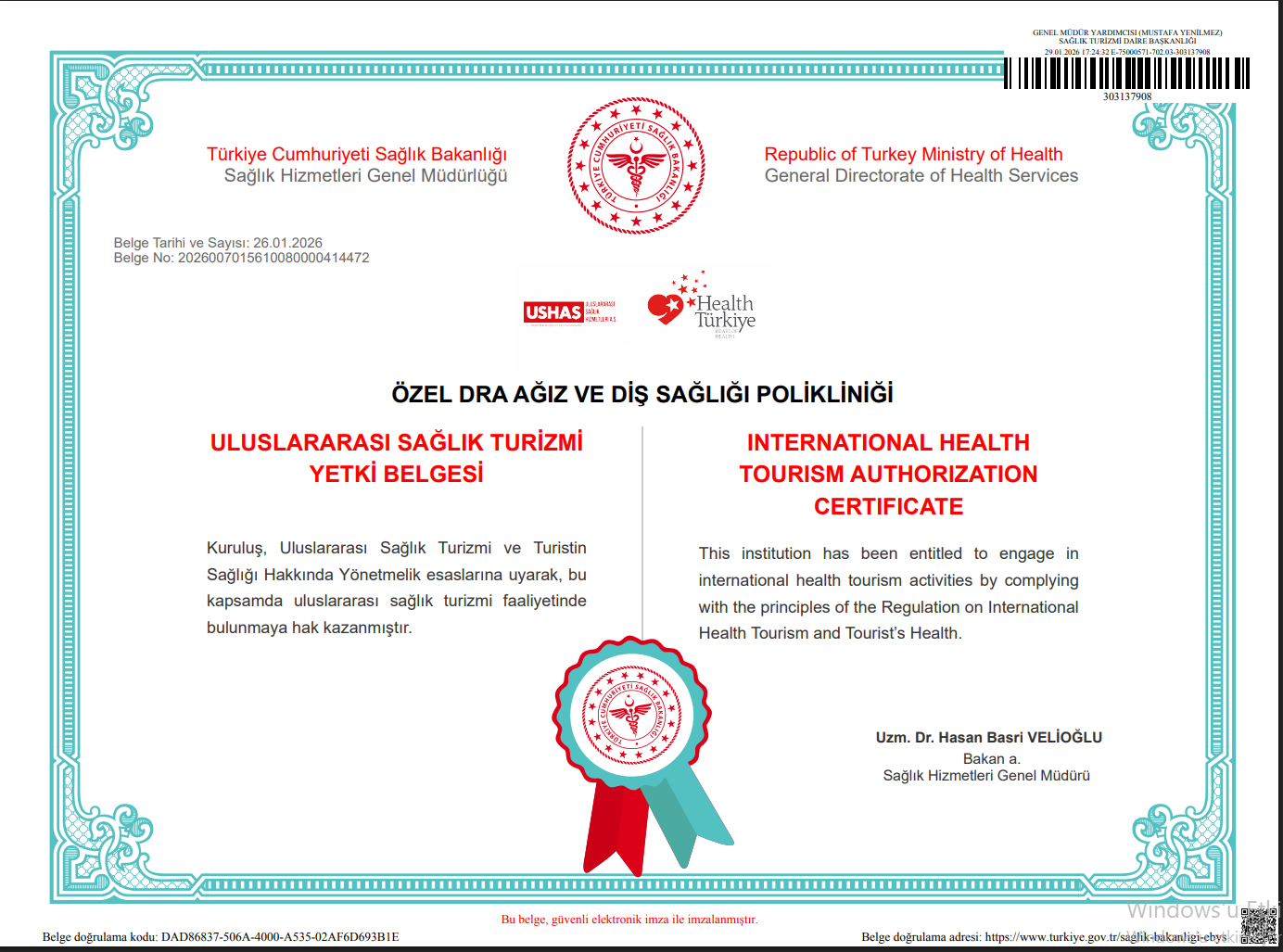
Part of Türkiye's Official Health Tourism Program

Ministry of Health Authorization Certificate
Book a Free Apical Surgery Assessment
If your tooth has a persistent infection that has not responded to root canal treatment, or if you have been told apical surgery may be needed, we are happy to review your case before you commit to travelling.
Send your X-rays and a brief description of your situation via WhatsApp (+44 7570 442248). Our dental team in Antalya will assess whether apical surgery is the right approach, explain what the procedure and recovery involve, and provide a written cost estimate. There is no charge for this review and no obligation to proceed.