
Being HIV-positive doesn’t rule out dental implants, and the research on well-managed cases backs that up directly. What matters is that your condition is under control, the same principle that applies to diabetes, hypertension, and most other long-term health conditions, not the diagnosis itself. Here’s what the evidence shows, and how your privacy is handled throughout.
Key Takeaways
- Studies on implants placed in HIV-positive patients report survival and success rates comparable to patients without HIV, when the condition is well managed
- Standard infection control precautions are used for every patient at DRA Dental, regardless of HIV status, not a separate protocol
- Your HIV status is treated as confidential medical information, shared only with the clinical staff directly involved in your care
- No dental team can refuse treatment based on HIV status alone, and that’s not how DRA Dental operates
- DRA Dental assesses your case individually via a Day 1 panoramic X-ray and a direct, private conversation about your health
What the Research Shows
A systematic review of dental implants placed in HIV-positive patients reported a patient-level survival rate of 94.76% and a success rate of 93.81%, with implant-level figures of 94.53% and 90.37% respectively, according to a systematic review published via PubMed. These figures are broadly comparable to survival and success rates reported for patients without HIV, and the review’s overall conclusion was direct: well-managed HIV-positive patients are eligible for implant treatment, with outcomes similar to HIV-negative patients.
The same research noted somewhat more soft-tissue healing variation and marginal bone loss in some HIV-positive patients compared to HIV-negative patients, an honest detail worth including rather than only the reassuring headline. The reviewers also noted the underlying evidence is still limited in quantity, since HIV-positive patients are a relatively small, less-studied group in implant research generally, which is a fair caveat rather than a reason for concern.
What Actually Matters: Management, Not Diagnosis
The consistent thread in this research, and in similar research on diabetes and cardiovascular conditions, is that how well a condition is managed matters far more than the diagnosis itself. A patient on effective antiretroviral therapy with a well-controlled viral load is in a meaningfully different position, clinically, to an untreated or poorly managed case. This is exactly why a direct, honest conversation about your current treatment and health status, not a blanket assumption either way, is part of a proper assessment.
Michael, a 46-year-old from Reading who has been on antiretroviral therapy for over a decade with a consistently undetectable viral load, had avoided asking his UK dentist about implants for years, worried the conversation itself would be awkward. When he messaged our dental team via WhatsApp, his HIV status was treated as a routine part of his medical history, discussed directly and without hesitation, and his treatment proceeded following a standard Day 1 assessment.
Standard Precautions, Not a Separate Protocol
Every patient at DRA Dental, regardless of any known condition, is treated under the same standard infection control precautions, following the approach recommended internationally for dental care. This isn’t a special protocol reserved for HIV-positive patients, it’s the baseline standard applied to everyone, which is both the correct clinical approach and the least stigmatising one.
Concerned about how your condition will be discussed or handled? Send your case details via WhatsApp, and our dental team will talk it through directly and confidentially, before you book anything.
Your Privacy Is Protected
Your HIV status, like any other medical information you share, is treated as confidential. It’s shared only with the clinical staff directly involved in planning and delivering your treatment, on a need-to-know basis, not discussed more broadly or recorded anywhere beyond what’s clinically necessary. No dental team is entitled to refuse treatment to a patient based on HIV status alone, and that principle guides how DRA Dental operates.
What DRA Dental Does for HIV-Positive Patients
Being HIV-positive isn’t treated as a barrier at DRA Dental. Our approach:
- A direct, private conversation about your current treatment and health status, including viral load control where relevant, handled the same way as any other medical history
- Day 1 panoramic X-ray, reviewed alongside your medical history before any surgical step
- Standard infection control precautions, applied to every patient, not a separate procedure
- A written treatment plan reflecting your specific case
- WhatsApp aftercare, for any question about healing
Results may vary based on individual assessment, and that assessment, not the diagnosis alone, is what shapes your treatment plan.
Practical Steps If You’re HIV-Positive and Considering Implants
A few things genuinely help your dental team plan properly:
- Be upfront about your HIV status and current treatment at your Day 1 assessment, since it’s relevant medical history, not something that needs to be hidden or minimised
- Mention your current viral load control, where known, since well-managed cases are consistently linked to better outcomes in the research
- Ask directly how your information is handled if privacy is a concern, our dental team will explain this clearly
- Attend every follow-up, so healing is monitored properly given the somewhat greater variation in soft-tissue healing seen in some studies
None of these guarantee a specific outcome, but each one supports the same honest, individualised assessment every patient receives.
Frequently Asked Questions
Can HIV-positive patients get dental implants?
Yes, in most cases. Research shows implant survival and success rates comparable to HIV-negative patients when the condition is well managed, with viral load control being the key factor rather than the diagnosis itself.
Does DRA Dental use different infection control for HIV-positive patients?
No. Standard infection control precautions are used for every patient, regardless of any known condition. This is both the correct clinical standard and avoids treating any patient differently.
Will my HIV status be kept confidential?
Yes. It’s treated as confidential medical information, shared only with the clinical staff directly involved in your treatment, on a need-to-know basis.
Can a dental clinic refuse to treat me because I’m HIV-positive?
No dental provider is entitled to refuse treatment based on HIV status alone. DRA Dental assesses every patient on their individual health status, not a diagnosis in isolation.
Does an undetectable viral load matter for implant treatment?
The research suggests well-managed HIV, generally associated with good viral load control, is linked to outcomes comparable to HIV-negative patients. Your current treatment and health status are part of a proper assessment.
Where is DRA Dental Clinic located?
DRA Dental Clinic is located in Kundu, Lara Beach, Antalya, Turkey.



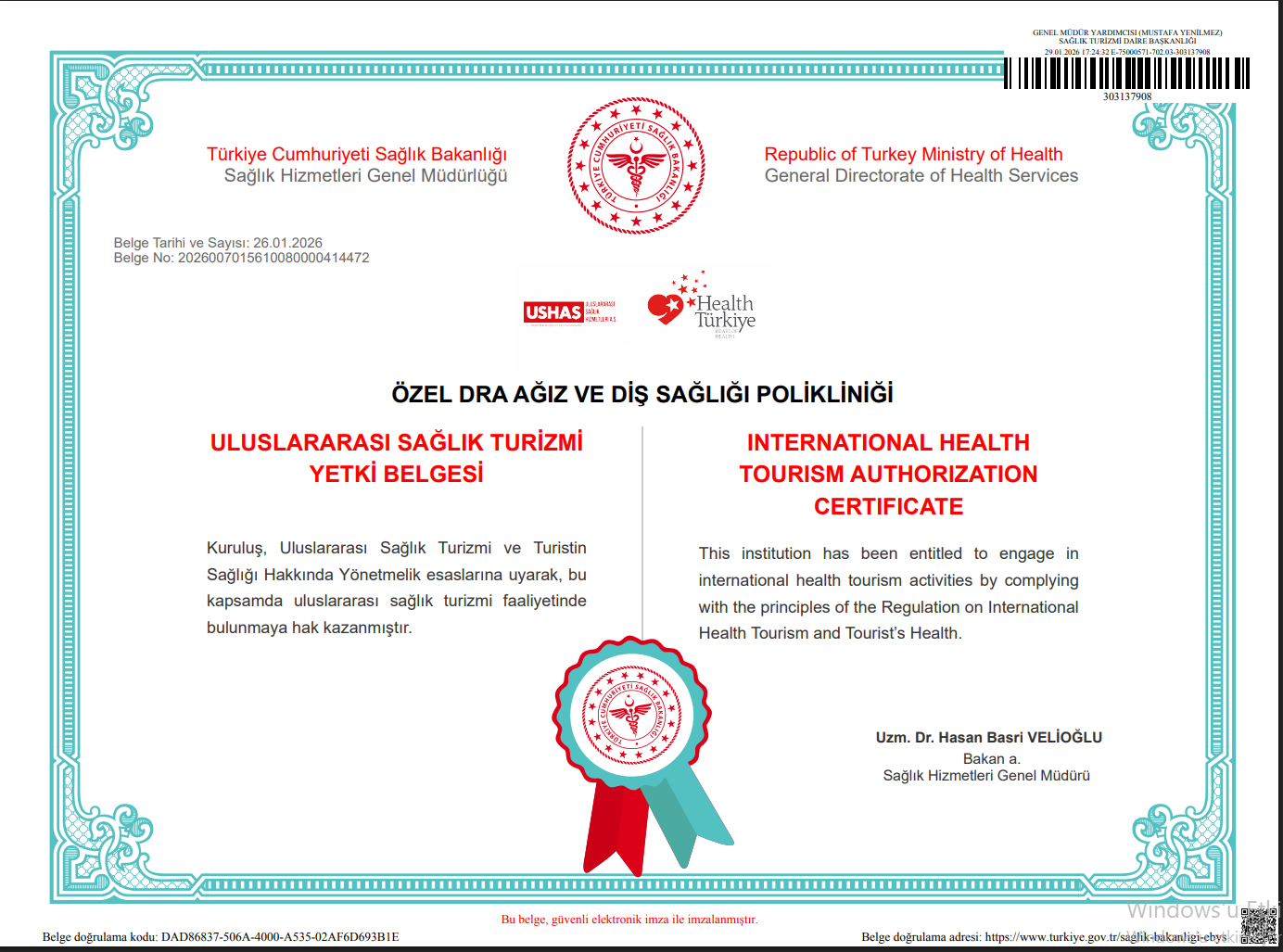
Part of Türkiye's Official Health Tourism Program

Ministry of Health Authorization Certificate
A Realistic Picture
Being HIV-positive doesn’t close the door on dental implants, particularly when the condition is well managed. What matters is an honest conversation about your health status, the same standard precautions and privacy protections every patient receives, and a plan based on your specific case rather than an assumption either way.
Send your case details via WhatsApp, or get in touch for a direct, confidential conversation before you commit to travelling.