
Tooth extraction in Turkey costs up to 70% less than at a UK private dentist, and at DRA Dental Clinic in Antalya, most simple extractions are completed in a single short appointment. For patients travelling from the UK who need a tooth removed, whether a painful wisdom tooth, a severely decayed molar, or a tooth that has not responded to root canal treatment, the combination of lower cost and minimal recovery time makes Antalya a practical choice.
This guide covers when extraction is necessary, the difference between simple and surgical procedures, what recovery looks like day by day, and what your options are for replacing the tooth afterwards.
Key Takeaways
- Tooth extraction in Turkey costs up to 70% less than UK private rates, including for surgical and wisdom tooth removals
- DRA Dental Clinic in Antalya offers simple and surgical extractions, including impacted wisdom teeth
- Most UK patients are comfortable flying home 3–5 days after extraction
- Saving the tooth via root canal treatment is almost always preferred where possible, our dental team will assess whether extraction is genuinely necessary
- Send us your X-rays via WhatsApp for a free case review and written cost estimate before you travel
When Is Tooth Extraction Necessary?
Dentists aim to preserve natural teeth wherever possible. Extraction is recommended when the tooth cannot be saved by other means, or when keeping it would cause harm to surrounding teeth and bone. The most common clinical reasons are:
Severe decay or fracture
When a tooth has been destroyed by decay or has fractured below the gum line, there is often insufficient remaining structure to support a crown or filling. If root canal treatment is not viable; because the roots are too compromised or the cost of restoration outweighs the long-term benefit, extraction becomes the appropriate course.
Failed root canal treatment
In some cases, infection at the root tip persists despite root canal treatment and retreatment. If apical surgery has also been unsuccessful, extraction may be the only remaining option to eliminate the infection and protect surrounding bone.
Advanced gum disease
Severe periodontal disease can destroy the bone supporting a tooth to the point where the tooth becomes mobile. Once mobility reaches a certain level, the tooth cannot be stabilised and extraction prevents further bone loss in the area.
Impacted wisdom teeth
Wisdom teeth (third molars) frequently do not have sufficient space to erupt correctly. Impaction causes pain, infection, damage to neighboring teeth, and in some cases cyst formation. Removing impacted wisdom teeth is one of the most common dental procedures performed at DRA Dental Clinic in Antalya.
Orthodontic preparation
Occasionally, a tooth is extracted to create space before orthodontic treatment. This is planned in advance as part of a broader treatment plan.
Tooth Extraction vs Saving the Tooth
If you are considering extraction because of pain or infection, it is worth understanding whether the tooth might be salvageable first. Saving a natural tooth is almost always preferable to extracting it, because natural teeth are more efficient for chewing and help maintain the jawbone.
Root canal treatment removes infected tissue from inside the tooth and seals it, allowing the tooth to be restored with a crown. This is the standard alternative to extraction for teeth with infected or damaged pulp, and it has a high success rate in appropriate cases.
If root canal treatment has already been attempted and the infection has not resolved, an apicoectomy (surgical removal of the infected root tip) may be the next step before extraction is considered.
Our dental team in Antalya will assess your X-ray and the clinical condition of your tooth honestly. If there is a realistic chance of saving it, we will explain that option first, together with the cost and likelihood of success. Extraction will only be recommended when it is genuinely the most appropriate course of action for your long-term oral health.
Types of Tooth Extraction at DRA Dental Clinic
Not all extractions are the same. The type of procedure depends on the position of the tooth, the condition of the root, and whether the tooth is visible above the gum line.
Simple Extraction
A simple extraction is performed on a tooth that is fully visible and accessible. The tooth is loosened using a dental elevator and then removed with forceps under local anaesthesia. The procedure typically takes 20–45 minutes. Recovery is straightforward, and most patients experience only mild discomfort for 24–48 hours afterwards.
Surgical Extraction
Surgical extraction is needed when a tooth is broken below the gum line, has curved or multiple roots that make simple removal difficult, or is impacted in the jaw. The procedure involves a small incision in the gum, and in some cases the removal of a small amount of bone to free the tooth. Surgical extractions take longer and involve a slightly more extended recovery period than simple extractions.
Wisdom Tooth Extraction
Wisdom tooth removal is the most common type of surgical extraction performed at DRA Dental Clinic in Antalya. Wisdom teeth are frequently impacted, meaning they are angled incorrectly in the jaw and cannot erupt fully, which makes simple removal impossible. The procedure follows the same surgical approach: local anaesthesia, a gum incision, removal of the tooth (sometimes in sections), and suturing.
UK patients often travel to Antalya specifically for wisdom tooth removal, where the cost is substantially lower than at UK private practices and waiting times are minimal. For patients with dental anxiety, sedation options are available.
The Tooth Extraction Procedure at DRA Dental Clinic, Antalya
Step 1: Assessment and treatment planning
A panoramic X-ray is taken to assess the root structure, tooth position, and the condition of surrounding bone. This confirms the type of extraction required and identifies any anatomy that may affect the procedure.
Step 2: Local anaesthesia
The area around the tooth is fully numbed before any work begins. You will feel pressure during the procedure but not pain. The anaesthetic takes effect within a few minutes of administration.
Step 3: Tooth loosening and removal
For a simple extraction, the tooth is loosened with a dental elevator before being removed with forceps. For a surgical extraction, a gum incision is made first, and the tooth may be divided into sections for easier removal.
Step 4: Socket care
Once the tooth is removed, the socket is cleaned and any sharp bone edges smoothed. Gauze is placed over the socket and you will be asked to bite down firmly for 30–45 minutes to encourage clot formation.
Step 5: Aftercare instructions
Our dental team provides written aftercare instructions covering diet, oral hygiene, pain management, and warning signs. These are given in English before you leave the clinic.
Tooth Extraction Recovery: What to Expect
Recovery after extraction is well-tolerated by most patients. The timeline below is particularly relevant for UK patients planning their return journey from Antalya.
First 24 hours
A blood clot forms in the socket, this is essential for healing and must not be disturbed. Avoid rinsing, spitting forcefully, using straws, or smoking during this period. Eat only soft foods and keep to cool or lukewarm temperatures. Some bleeding, swelling, and discomfort are normal.
Days 2–3
Swelling typically peaks at around 48 hours before beginning to reduce. Over-the-counter pain relief, ibuprofen or paracetamol, manages discomfort for the majority of patients. Soft foods remain advisable.
Days 3–5
Swelling reduces noticeably and most patients feel significantly more comfortable. This is the window in which most UK patients fly home from Antalya after a simple or straightforward surgical extraction. Our dental team will advise based on your individual recovery.
Days 7–14
The socket closes over with soft tissue. Avoid the extraction site when brushing until it is fully healed.
What to avoid throughout recovery:
– Smoking, significantly increases the risk of dry socket and impairs healing
– Straws, suction can dislodge the blood clot
– Hard, crunchy, or chewy foods until comfortable
– Strenuous physical activity for 2–3 days
Dry socket: what it is and how to avoid it
Dry socket occurs when the blood clot in the extraction socket dislodges or dissolves before the wound has healed, leaving the bone exposed. It affects approximately 2–5% of extractions overall, and up to 30% of lower wisdom tooth extractions. It typically presents as a severe, throbbing pain 3–5 days after the procedure. Smoking is the single biggest preventable risk factor. If you develop symptoms of dry socket after returning home, contact our team via WhatsApp (+44 7570 442248) immediately, we will advise on management and, if necessary, coordinate care with a local dentist in the UK.
What Happens After Tooth Extraction? Replacing the Tooth
Extracting a tooth is not the end of the treatment, it is often the beginning of a restoration plan. When a tooth is removed and not replaced, the neighbouring teeth gradually shift towards the gap, the opposing tooth drifts, and the jawbone in the extraction area begins to reduce in volume over time. This affects bite alignment, facial structure, and the health of surrounding teeth.
The options for replacing an extracted tooth are:
Dental implant
A dental implant is a titanium post placed into the jawbone to act as an artificial root, onto which a crown is fitted. It is the closest functional and aesthetic replacement for a natural tooth, and it stimulates the jawbone to prevent bone loss. In some cases, implant placement can be planned for the same trip as extraction. Find out more about dental implants in Antalya →
Dental bridge
A bridge uses the neighboring teeth as anchors to support a false tooth in the gap. It is a fixed, non-removable option but requires the preparation of healthy neighboring teeth.
Partial denture
A removable partial denture is the least invasive option but is generally considered a temporary or interim solution rather than a long-term replacement.
Our dental team will discuss replacement options with you before extraction so you can make an informed decision, including whether implant placement in the same visit is appropriate for your case.
Tooth Extraction Cost in Turkey vs the UK
Tooth extraction at a UK private dentist ranges from £80 for a simple extraction to over £600 for a complex surgical wisdom tooth removal. At DRA Dental Clinic in Antalya, Turkey, the same procedures cost significantly less, typically 60–70% lower, using equivalent clinical protocols and materials.
| Treatment | UK Private Dentist | DRA Dental Clinic, Antalya | Estimated Saving |
|---|---|---|---|
| Simple tooth extraction | £80–£200 | Get a quote → | ~60–70% |
| Surgical tooth extraction | £200–£500 | Get a quote → | ~60–70% |
| Wisdom tooth extraction (surgical) | £250–£600+ | Get a quote → | ~65–75% |
UK private fees shown are indicative, based on published price ranges across UK dental practices. DRA Dental fees depend on the complexity of the case and the number of teeth involved. Send us your X-rays for a personalised written estimate before you travel.
For patients needing multiple wisdom teeth removed, the savings compared to UK private dentistry are often substantial enough to cover accommodation in Antalya with money remaining.
Why Choose DRA Dental Clinic for Tooth Extraction in Antalya?
DRA Dental Clinic is located in Kundu, Lara Beach, Antalya, Turkey, and regularly treats UK patients who travel specifically for extraction procedures, including wisdom tooth removal.
Free pre-travel assessment
Send us photos or X-rays of the affected tooth via WhatsApp (+44 7570 442248). Our dental team will confirm whether extraction is the appropriate treatment, outline the procedure, and provide a written cost estimate, at no charge and with no obligation to proceed.
English-speaking team throughout
All clinical and coordination staff at our Antalya clinic communicate in English. You will not encounter a language barrier at any point during your visit.
Transparent, fixed pricing
You receive a written treatment plan and fixed cost breakdown before any procedure begins. No unexpected charges during treatment.
WhatsApp aftercare from home
After you return to the UK, our team is reachable by WhatsApp or phone if you have concerns about your recovery, including questions about dry socket, pain management, or when to resume normal eating. If hands-on review is needed, we will advise on next steps.
Extraction and implant coordination
If you are planning to replace an extracted tooth with a dental implant, our team can assess whether both procedures can be planned around a single trip to Antalya, avoiding a second journey.
Read what patients say about their experience at DRA Dental before you decide.
Frequently Asked Questions About Tooth Extraction in Turkey
How long does tooth extraction take at DRA Dental in Antalya?
A simple extraction typically takes 20–45 minutes from start to finish. A surgical extraction or wisdom tooth removal takes 45–90 minutes, depending on the position of the tooth and the complexity of the roots. Allow a half-day for your appointment, particularly for surgical cases.
Is tooth extraction painful?
The extraction area is fully numbed with local anaesthesia before work begins, so you will feel pressure and movement but not pain during the procedure. Post-operative discomfort, aching and swelling, is expected for 24–72 hours and is well managed with standard over-the-counter pain relief. Most patients find the experience straightforward.
How long after tooth extraction can I fly home?
For a simple extraction, most patients are comfortable flying 2–3 days afterwards. After a surgical extraction or wisdom tooth removal, 3–5 days is a more realistic target. Our dental team will advise based on your recovery progress. Flying too soon after a surgical procedure carries a small risk of increased bleeding, so we recommend not rushing the return journey.
What is dry socket and how do I avoid it?
Dry socket occurs when the blood clot in the extraction socket dislodges before the wound has healed, exposing the underlying bone. It causes a distinctive severe, throbbing pain that typically develops 3–5 days after extraction. The most effective preventive measures are not smoking, not using straws, and avoiding vigorous rinsing during the first 24 hours. If you develop dry socket symptoms after returning home, contact our team by WhatsApp immediately.
How much does tooth extraction cost in Turkey?
At DRA Dental Clinic in Antalya, tooth extraction costs 60–70% less than at a UK private dentist. A simple extraction, surgical extraction, or wisdom tooth removal can all be completed at a fraction of UK private rates. Contact us with your X-rays for a personalised written estimate at no charge.
Do I need to replace an extracted tooth?
Not always, but in most cases, replacing an extracted tooth is advisable. Without a replacement, neighboring teeth shift towards the gap over time and bone loss occurs in the jaw beneath the empty socket. Dental implants are the most effective long-term solution for preserving bone and restoring full function. Our team can advise whether implant planning can be incorporated into your trip to Antalya.
Can I get a dental implant in the same trip as my extraction?
In some cases, yes. Immediate implant placement (placing the implant at the time of extraction) is possible when the bone and socket condition are suitable. In other cases, a healing period of a few months is needed before the implant is placed. Our dental team will assess your X-rays and advise on the most appropriate timing for your situation.
Where is DRA Dental Clinic located?
DRA Dental Clinic is located in Kundu, Lara Beach, Antalya, Turkey — approximately ten minutes from Antalya Airport. Airport transfers can be arranged by the clinic.



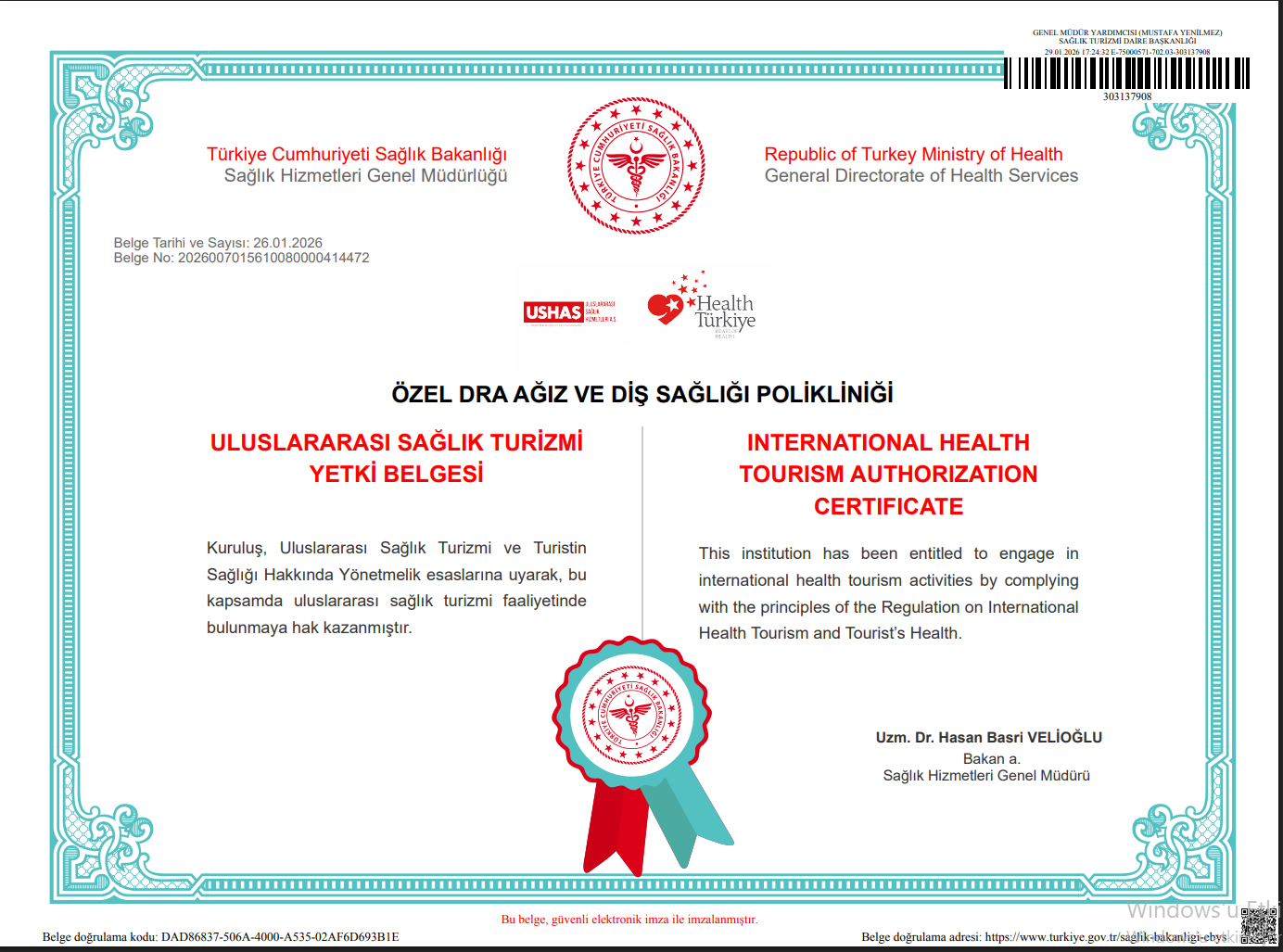
Part of Türkiye's Official Health Tourism Program

Ministry of Health Authorization Certificate
Book a Free Tooth Extraction Assessment
If you need a tooth removed, whether it is a painful wisdom tooth, a failed root canal, or a tooth that is too damaged to restore, we are happy to review your case before you commit to travelling.
Send us your X-rays and a brief description of the tooth in question via WhatsApp (+44 7570 442248). Our dental team in Antalya will confirm whether extraction is the right course of action, outline the procedure, and provide a written cost estimate. There is no charge for this review and no obligation to proceed.