Epilepsy doesn’t automatically rule out dental implants, and a long-term study following patients with severe epilepsy actually found notably strong results. What matters most is your seizure control and overall assessment, not the diagnosis on its own. Here’s what the evidence actually shows.
Key Takeaways
- A long-term retrospective study of patients with severe, refractory epilepsy found 97.6% functional implant survival after 16 years
- Fixed restorations like implants carry a practical advantage over removable dentures for some epilepsy patients, since a removable denture can potentially be dislodged during a seizure
- Seizure control, assessed alongside medications and general health, matters more than the epilepsy diagnosis itself
- Oral hygiene and regular monitoring matter for any implant patient, and this is no different for patients with epilepsy
- DRA Dental assesses your specific seizure history and control directly, rather than assuming epilepsy rules you out
What a Long-Term Study Actually Found
A retrospective study following patients with severe, treatment-resistant epilepsy and multiple disabilities who received dental implants over several years found striking long-term results: of 134 implants placed in 61 patients, only three failed, giving an estimated functional survival of 97.6% after 16 years of follow-up. This is a notably long observation period for implant research, and the result held even in a population with more complex, severe epilepsy than most patients considering implant treatment. The study also found inflammation around the implants was generally mild and marginal bone levels remained stable on X-rays, even though researchers noted oral hygiene around the implants wasn’t always ideal, suggesting the implants themselves tolerated the situation well. The authors concluded implant treatment was a viable option for this population, describing implant loss as rare.
Why Fixed Restorations Carry a Practical Advantage for Some Patients
Beyond survival statistics, there’s a practical safety consideration worth understanding: a removable denture can potentially become dislodged or, in rare cases, be aspirated during a seizure, which is part of why dental teams have historically favoured fixed restorations, like implant-supported crowns or bridges, over removable options for some patients with epilepsy. This isn’t a reason epilepsy patients need implants specifically, but it’s a genuine, practical factor worth discussing directly if you’re weighing a fixed versus removable solution for your own case.
Daniel, a 41-year-old from Manchester with well-controlled epilepsy on long-term medication, had been told years earlier that implants probably weren’t an option for him, without further explanation. After sending his seizure history and current medication details via WhatsApp, DRA Dental’s clinical team reviewed his case individually, his seizures were well controlled and infrequent, and his treatment proceeded as a standard assessment from there.
Why Seizure Control Matters More Than the Diagnosis Itself
As with other health conditions covered on this site, the diagnosis name matters less than how well it’s actually controlled. Well-controlled epilepsy, with infrequent or absent seizures on stable medication, is a very different clinical picture from frequent, poorly controlled seizures, and this distinction, not the word “epilepsy” on its own, is what a sensible assessment is actually based on.
Not sure how your own seizure history and medication affect your case? Send your medical history via WhatsApp, and our dental team can give you a direct, honest read before you assume either way.
What Actually Determines Your Candidacy
As with bone volume and age, an epilepsy diagnosis on its own isn’t the deciding factor, your overall health picture is, assessed directly. This includes your seizure frequency and control, current medications, and the same Day 1 bone assessment every patient receives, not a generic rule applied to an entire diagnosis category.
What DRA Dental Does to Assess This Properly
Your case is assessed from your actual seizure history and health picture, not a diagnosis alone. Our approach:
- A full review of your seizure history, frequency, and current medication, not treated as an automatic exclusion
- A Day 1 panoramic X-ray, showing your actual bone volume and density at each potential implant site
- An honest conversation about fixed versus removable options, where relevant to your specific case
- A written treatment plan, reflecting your specific health history
Results may vary based on individual assessment, and that assessment, not a blanket rule about epilepsy, is what shapes your treatment plan.
Practical Steps If You Have Epilepsy
A few things help before you assume either outcome:
- Send your seizure history and current medication details via WhatsApp, so our dental team can give you an initial read
- Mention how well-controlled your seizures currently are, since this matters more than the diagnosis name itself
- Don’t assume a vague past comment from another dentist is the final word, ask for the specific reasoning behind it
- Ask directly about fixed versus removable restoration options, if that’s a relevant consideration for your case
None of this replaces an actual assessment, but it helps you approach your Day 1 consultation with realistic expectations.
Frequently Asked Questions
Can I get dental implants if I have epilepsy?
In most cases, yes. A long-term study of patients with severe epilepsy found 97.6% functional implant survival after 16 years, and the diagnosis itself isn’t considered an automatic barrier.
Are dental implants safer than dentures for people with epilepsy?
For some patients, fixed restorations like implants carry a practical advantage, since a removable denture can potentially be dislodged during a seizure, though your own case should be discussed directly with your dental team.
Does seizure control matter for implant candidacy?
Yes. How well-controlled your seizures are, alongside your medication and general health, matters more than the epilepsy diagnosis itself.
Will DRA Dental ask about my epilepsy before treatment?
Yes, directly and honestly, as part of a full health history review, the same way any relevant health condition is discussed, not to disqualify you but to assess your specific case properly.
Where is DRA Dental Clinic located?
DRA Dental Clinic is located in Kundu, Lara Beach, Antalya, Turkey.



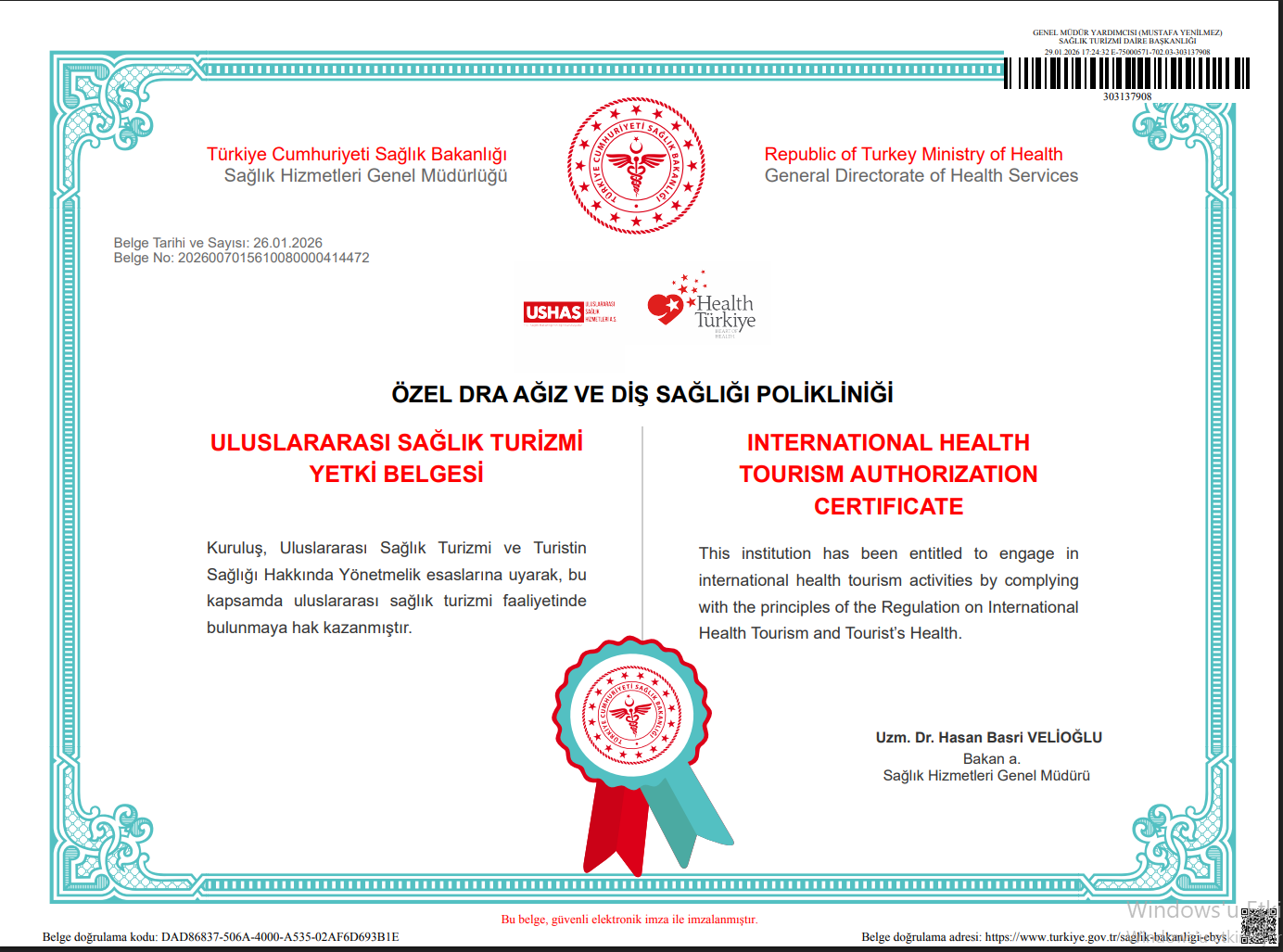
Part of Türkiye's Official Health Tourism Program

Ministry of Health Authorization Certificate
A Realistic Picture
Epilepsy very rarely rules someone out of dental implant treatment on its own, and long-term evidence, even in patients with severe, treatment-resistant epilepsy, shows strong implant survival over many years. What matters is an honest, individual assessment of your seizure control and overall health, not an assumption based on a diagnosis alone.
Send your medical history via WhatsApp, or get in touch for an initial read on your own case before you assume either way.