A well-integrated dental implant doesn’t cause bone loss as you age, if anything, the evidence points the other way, implants are what keep the bone in that area stimulated and stable, the way a natural tooth root does. Where bone loss around an implant does happen years later, research consistently points to a specific, preventable cause, not an inevitable side effect of getting older. Here’s what actually happens to bone around implants over decades.
Key Takeaways
- Implants don’t cause age-related bone loss, they prevent the bone loss that happens when a tooth is missing and the site has no stimulation at all
- A 2024 meta-analysis of 20-year implant data found most long-term bone loss findings were minimal, one included study recorded just 0.13mm of change on average
- Where meaningful bone loss around an implant does occur, it’s overwhelmingly linked to peri-implantitis, a preventable inflammation issue, not aging itself
- General age-related bone conditions like osteoporosis haven’t been shown to increase implant failure risk, according to international consensus
- DRA Dental’s approach to long-term implant health focuses on what actually protects bone, hygiene and monitoring, not an unavoidable aging process
Why This Concern Gets the Direction Backwards
The worry behind this question usually comes from a reasonable place, people know that losing a tooth leads to bone loss in that area over time, since the bone no longer gets the stimulation a tooth root provides. What often gets misunderstood is that a dental implant is specifically what restores that stimulation, a titanium implant functions like an artificial tooth root, transmitting the forces of biting and chewing into the surrounding bone, which is what keeps it active and maintained rather than letting it resorb. This is covered in more detail in our guide to bone volume and dental implants, bone loss is what happens around a missing tooth, not around a properly integrated implant.
What Actually Happens to Bone Around Implants Over Decades
A 2024 meta-analysis consolidating 20-year dental implant survival data looked closely at long-term outcomes across multiple studies. Within the underlying research, bone loss findings varied considerably between studies, one study recorded an average of just 0.13mm of bone change over the long term, essentially stable, while 34% of patients in another study showed no measurable bone loss at all after two decades. A smaller subset of implants did show more significant bone loss, over 2.5mm in roughly 18.5% of cases in one study, and this is the figure worth understanding properly, since it wasn’t random or age-driven, it was closely tied to peri-implantitis, affecting around 10% of implants in that same group.
The Real Cause of Long-Term Bone Loss: Peri-Implantitis, Not Age
Peri-implantitis is an inflammatory condition around an implant, driven by bacterial plaque buildup, similar in principle to gum disease around natural teeth, and it’s the factor research consistently ties to meaningful long-term bone loss, not the number of years since placement or your age. This is genuinely good news in terms of what you can control, peri-implantitis is substantially preventable with consistent oral hygiene, regular check-ups, and prompt attention if something feels off, which is a very different picture from an unavoidable aging process you have no influence over.
Graham, a 69-year-old from Norwich with an implant placed over fifteen years earlier, had read online that implants “wear out” the surrounding bone as you age and had become anxious about his own long-term results. After sending photos and describing his routine via WhatsApp, DRA Dental’s clinical team explained that his consistent hygiene habits and regular check-ups were exactly what protected his bone over that time, not luck, and that his implant showed the stability typical of a well-maintained case, not an aging-related decline.
What About General Age-Related Bone Conditions?
It’s a fair question whether broader skeletal aging, such as osteoporosis, changes this picture. According to an international consensus statement on the topic, current evidence does not suggest an association between antiresorptive therapy for osteoporosis and dental implant failure, implants function well even alongside common age-related bone conditions, provided the situation is assessed individually rather than assumed.
Concerned about your own long-term implant or bone health? Send photos or a description via WhatsApp, and our dental team can give you a direct, honest read rather than a generic reassurance.
What DRA Dental Does to Support Long-Term Bone Health
Protecting bone around your implant long-term comes down to specific, controllable factors, not an inevitable process. Our approach:
- A written plan that includes long-term care guidance, not just the placement procedure itself
- Clear hygiene expectations, since consistent care is the single biggest factor in avoiding peri-implantitis
- Honest answers if something feels different years later, rather than dismissing long-term questions
- The same individualised assessment for patients with osteoporosis, age-related bone changes, or any other relevant health factor
Results may vary based on individual circumstances and hygiene, and that reality, not an unavoidable aging process, is what actually determines long-term bone stability around an implant.
Practical Steps to Protect Bone Around Your Implant Long-Term
A few things genuinely make a difference over the years:
- Keep up consistent oral hygiene around your implant, exactly as you would for natural teeth, since this is what prevents peri-implantitis
- Attend regular dental check-ups, so any early signs of inflammation are caught before they affect bone
- Don’t assume age alone explains a change you notice, mention it directly instead of assuming it’s expected
- Ask your own dental team for an honest read on your specific case, rather than relying on general claims found online
None of this guarantees a specific outcome, but each step addresses the actual, documented cause of long-term bone loss around implants.
Frequently Asked Questions
Does a dental implant cause bone loss as you get older?
No, the evidence points the opposite direction. A well-integrated implant prevents the bone loss that happens around a missing tooth, and long-term studies show most implants maintain stable bone over decades.
What actually causes bone loss around an implant years later?
Research consistently points to peri-implantitis, an inflammatory condition driven by bacterial plaque, not age itself. This is largely preventable with consistent hygiene and regular check-ups.
How much bone loss is normal around a long-term implant?
Long-term data varies, but minimal change, well under half a millimetre over many years in several studies, is a common and reassuring finding for well-maintained implants.
Does osteoporosis or aging bone density loss affect my implant?
Current international consensus doesn’t show an association between antiresorptive osteoporosis therapy and implant failure, your case is still assessed individually.
Where is DRA Dental Clinic located?
DRA Dental Clinic is located in Kundu, Lara Beach, Antalya, Turkey.



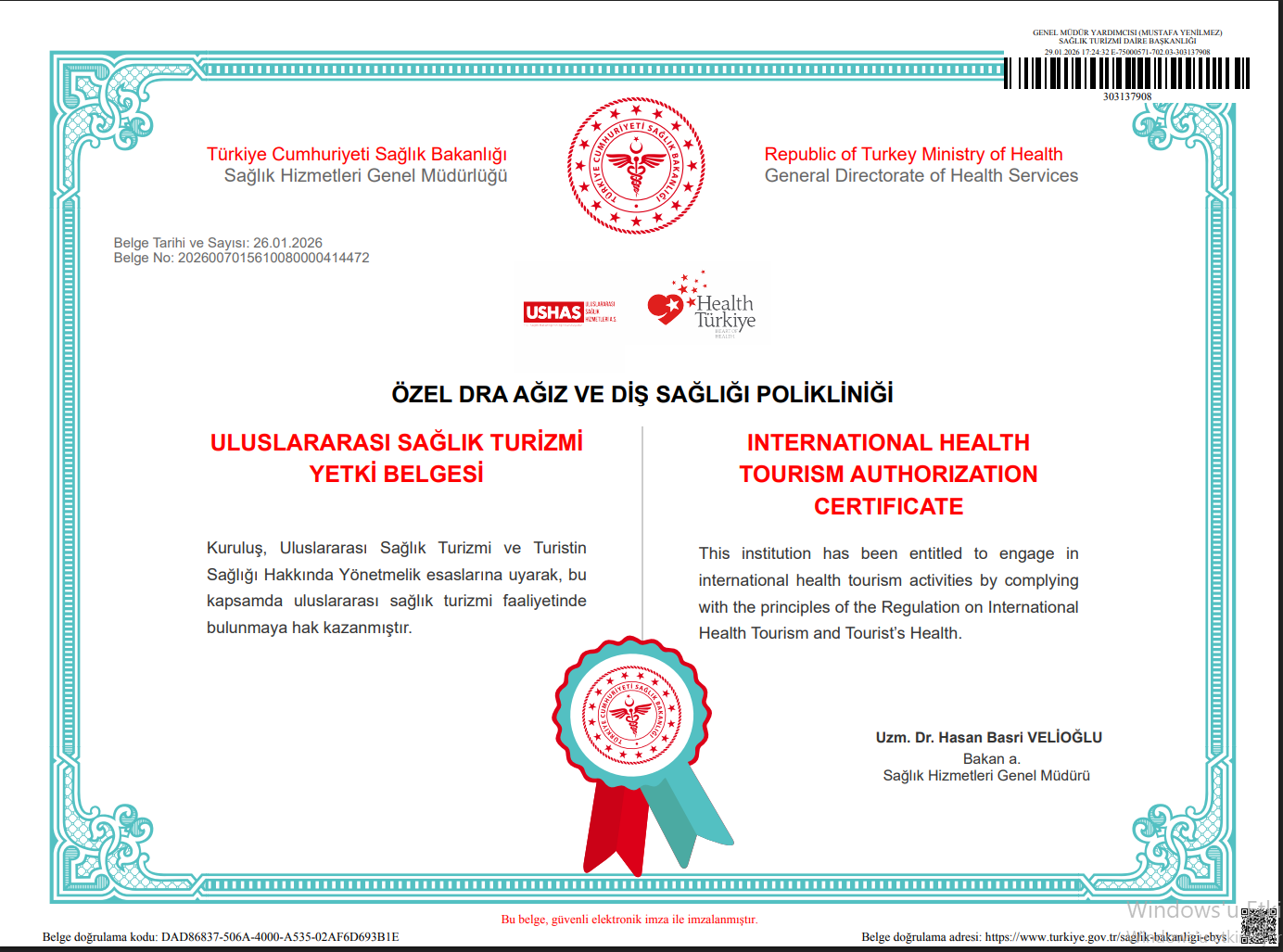
Part of Türkiye's Official Health Tourism Program

Ministry of Health Authorization Certificate
A Realistic Picture
A dental implant doesn’t cause bone loss as you age, it’s specifically designed to prevent it, by restoring the stimulation a natural tooth root once provided. Where long-term bone loss does occur, the evidence points to peri-implantitis, a preventable, hygiene-related issue, not an inevitable consequence of getting older. What matters most over the years is consistent care and honest attention if something changes, not an assumption that aging alone explains it.
Send photos or a description via WhatsApp, or get in touch for a direct, honest read on your own long-term implant or bone health.