
Being on a blood thinner doesn’t rule out dental implants, and the research backs that up more clearly than a lot of general advice online suggests. There’s a real bleeding-risk difference to understand, but “real” and “dangerous” aren’t the same thing. Here’s what the evidence actually shows.
Key Takeaways
- Continuing your blood thinner during implant surgery is generally considered safe when proper local measures are used
- Bleeding risk does increase, but the size of that increase depends heavily on study quality, and reported bleeding events are rarely serious
- Warfarin, newer anticoagulants (DOACs), and antiplatelet drugs each carry a different level of risk
- You should never stop or adjust a blood thinner yourself before treatment
- DRA Dental assesses your case individually via a Day 1 panoramic X-ray and an open conversation about your current medication
What the Research Shows
A 2025 systematic review and meta-analysis of 15 studies on dental implant placement in patients taking anticoagulant or antiplatelet medication found a pooled bleeding-risk ratio of 4.47 compared to patients not on these medications, according to a systematic review and meta-analysis published via PubMed Central. That figure looks significant on its own, and it is worth taking seriously — but the same review ran a separate analysis limited to the four lowest-bias studies, and that narrower, higher-quality comparison found a risk ratio of 1.61, which wasn’t statistically significant.
That gap between the two figures matters. It suggests some of the headline 4.47 number comes from weaker study design rather than the medication itself, and that the true risk, while present, is smaller than the most-cited figure implies. Either way, the review’s own bottom line was direct: bleeding complications were manageable with standard local measures, and no life-threatening bleeding events were reported across any of the 15 studies.
Risk also varies by drug. Warfarin-related bleeding rates ranged from 4% to 27.5% depending on how complex the procedure was, newer anticoagulants (DOACs like apixaban, rivaroxaban, and dabigatran) sit somewhere between warfarin and antiplatelet drugs, and single antiplatelet medications like aspirin alone showed a bleeding rate of roughly 1.6%.
Why Blood Thinners Affect Implant Surgery
Anticoagulant and antiplatelet medications work by slowing the blood’s ability to clot, which is exactly what they’re meant to do for people at risk of stroke or clot-related complications. During implant placement, that same mechanism can mean slightly more bleeding at the surgical site and, in some cases, a longer time to full clot formation afterward. It’s a mechanical trade-off, not a sign that implants themselves are riskier for you.
Robert, a 61-year-old from Leeds on a DOAC following an irregular heart rhythm diagnosis, had assumed implants were off the table for him after a previous dentist mentioned bleeding risk without much explanation. When he messaged our dental team via WhatsApp, they walked him through what the research actually says about his specific medication, confirmed nothing needed to change with his prescription, and after his Day 1 assessment, his treatment went ahead with standard local bleeding-control measures and no complications.
Never Stop Your Blood Thinner Without Medical Guidance
This is worth stating plainly: stopping or reducing your anticoagulant on your own before travelling for treatment is not a precaution, it’s a risk in the wrong direction. These medications exist to prevent stroke and clot formation, and pausing them without your prescribing doctor’s guidance can matter far more than the modest bleeding-risk increase described above.
Not sure how your specific medication affects your treatment plan? Send your case details via WhatsApp, and our dental team will talk through what we need to know before you book anything.
What DRA Dental Does for Patients on Blood Thinners
Being on a blood thinner isn’t an automatic barrier to treatment at DRA Dental. Our approach:
- Day 1 panoramic X-ray, reviewed by our dental team before any surgical step, to assess bone quality and plan accordingly
- A direct conversation about your current medication, including which drug and dosage, rather than a blanket policy based on the fact that you’re on one
- A written treatment plan reflecting your specific case
- WhatsApp aftercare, useful for flagging any unusual bleeding or swelling during healing
Results may vary based on individual assessment, and that assessment, not the medication alone, is what shapes your treatment plan.
Practical Steps If You’re on Blood Thinners and Want Implants
A few things genuinely help, alongside continuing your medication exactly as your doctor has prescribed it:
- Bring your exact medication name, dosage, and prescribing doctor’s details to your Day 1 assessment, since the specific drug changes what our dental team needs to plan for
- Mention any recent dosage changes (a new medication, a recent adjustment following a check-up), since this context shapes your assessment
- Avoid NSAIDs like ibuprofen or aspirin for pain relief unless already prescribed, since these can add to bleeding risk on top of your existing medication — paracetamol is generally the safer option, but always confirm with our dental team
- Attend every follow-up, so any unusual bleeding is caught and addressed quickly
None of these guarantee a specific outcome, but each one reduces avoidable risk around a process that already has a strong safety record.
Frequently Asked Questions
Can you get dental implants while on blood thinners?
Yes. Research shows implant placement is generally safe for patients on anticoagulant or antiplatelet medication when standard local bleeding-control measures are used, and no life-threatening bleeding events were reported across the studies reviewed.
Do I need to stop my blood thinner before implant surgery?
No, not without your prescribing doctor’s explicit guidance. Stopping an anticoagulant on your own carries a real stroke or clot risk that outweighs the modest bleeding-risk increase from continuing it during treatment.
Does the type of blood thinner make a difference?
Yes. Warfarin, newer anticoagulants (DOACs), and antiplatelet drugs like aspirin each carry a different bleeding-risk profile, with single antiplatelet medications generally showing the lowest rates. Our dental team factors in your specific medication during your Day 1 assessment.
Will DRA Dental ask about my medication before treatment?
Yes, always. Our dental team will discuss your exact medication, dosage, and any recent changes as part of your case review, alongside your Day 1 panoramic X-ray.
Is it safe to take painkillers after implant surgery while on blood thinners?
Paracetamol is generally the safer option. NSAIDs such as ibuprofen or aspirin can increase bleeding risk on top of your existing medication, so confirm your pain relief plan with our dental team before your procedure.
Where is DRA Dental Clinic located?
DRA Dental Clinic is located in Kundu, Lara Beach, Antalya, Turkey.



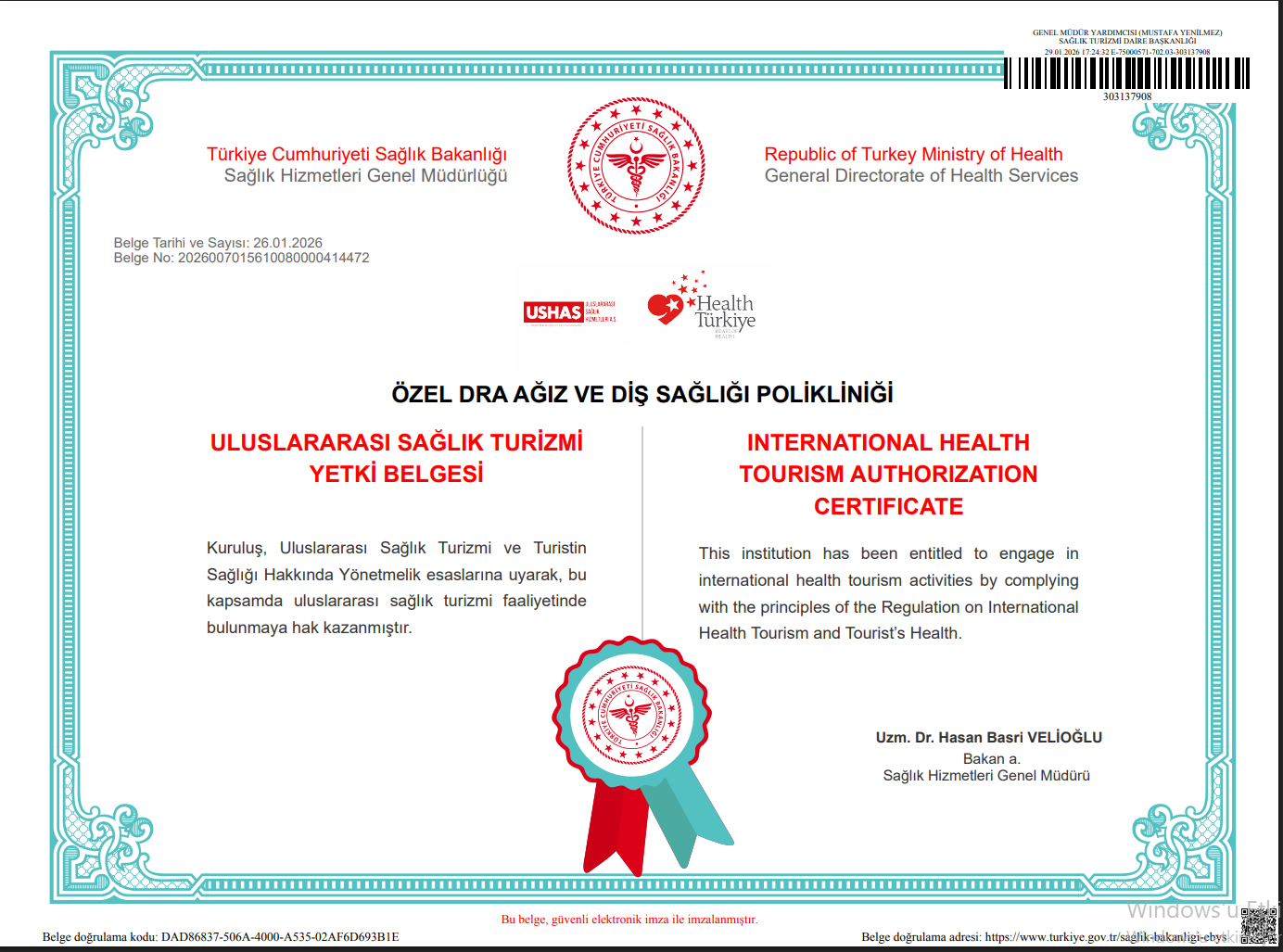
Part of Türkiye's Official Health Tourism Program

Ministry of Health Authorization Certificate
A Realistic Picture
Being on a blood thinner changes the conversation around dental implants, but it doesn’t close the door on them. What matters is continuing your medication as prescribed, being upfront with our dental team about your exact situation, and letting a proper Day 1 assessment — not a blanket assumption either way — shape your treatment plan.
Send your case details via WhatsApp, or get in touch for a direct, case-specific conversation before you commit to travelling.