
Having heart disease or high blood pressure doesn’t rule out dental implants, and the largest research on the subject backs that up directly. What matters is whether your condition is controlled, not whether you have a diagnosis on file. Here’s what the evidence actually shows, including the parts that call for a genuine conversation rather than a blanket yes.
Key Takeaways
- A meta-analysis of over 21,000 implants found hypertension alone does not increase implant failure risk when compared with implants in patients without high blood pressure
- Cardiovascular disease that is medically controlled is not considered a contraindication to implant treatment
- The same review discusses a plausible biological mechanism (hypertension’s effects on bone metabolism) that could affect healing, though it wasn’t reflected in worse failure outcomes, worth knowing, not just a reassuring headline
- Some heart conditions affect whether sedation is an option, separately from whether implants themselves are safe
- DRA Dental assesses your case individually via a Day 1 panoramic X-ray and a direct conversation about your condition and medication
What the Research Shows
A 2024 systematic review and meta-analysis covering 24 published studies looked at 4,874 implants placed in hypertensive patients against 16,192 implants placed in patients with normal blood pressure, according to a systematic review and meta-analysis published via PubMed. Failure rates were close in both groups, 257 failures among the hypertensive implants and 809 among the normotensive ones, and the statistical comparison found no significant difference in failure risk between the two (odds ratio 1.10, not statistically significant).
That’s a genuinely reassuring result on the headline question. The reviewers also discuss a biological rationale for caution: hypertension is known to affect bone metabolism, including slower bone regeneration and changes in bone density, driven by mechanisms like elevated parathyroid hormone and reduced vitamin D levels. This didn’t translate into a measurable difference in implant failure in the pooled data, and the review itself notes that most of the included studies didn’t report whether patients’ hypertension was well-controlled, which limits how far any bone-related conclusion can be drawn. The takeaway isn’t that hypertension is risk-free, it’s that the failure-rate evidence is reassuring, while the underlying biology is still a reasonable thing to ask your dental team about.
Separately, broader research on cardiovascular disease in general (not hypertension specifically) has found no statistically significant difference in implant failure rates between patients with certain cardiovascular conditions and those without, as long as the condition is managed through appropriate medical treatment. Uncontrolled disease is a different picture, but that’s true of almost any systemic condition, not something specific to your heart.
Does a History of Heart Disease Change Anything?
The consistent theme across the research is control, not diagnosis. A patient with well-managed hypertension or a stable, medically treated cardiac history isn’t in a meaningfully different position from a patient with no cardiac history at all, as far as implant integration goes. What does matter is that your dental team knows the full picture, since some practical decisions, like which local anaesthetic formulation to use or whether sedation is appropriate, depend on the specific condition and how it’s currently managed.
Graham, a 58-year-old from Cardiff on medication for high blood pressure since his mid-40s, had been told by a UK dentist years earlier that his implant options might be limited because of his heart medication, without much further explanation. When he messaged our dental team via WhatsApp about missing back teeth, they asked for his exact medication and a brief history, confirmed nothing about his treatment plan needed to change, and his implants were placed following a standard Day 1 assessment, with routine healing and no complications.
Local Anaesthetic, Sedation, and Your Heart
This is where a heart condition can genuinely change a detail of your treatment, separate from whether implants are safe overall. Local anaesthetics used during implant surgery often contain a small amount of epinephrine to help control bleeding at the site, and for certain cardiac conditions or certain heart medications, our dental team may adjust the formulation or dosage used. Similarly, as covered in our guide to sedation and general anaesthesia, some cardiac conditions require special consideration for sedation specifically, and in rarer cases can rule it out, even when the implant procedure itself is unaffected. These are two separate questions, and conflating them is a common source of confusion.
Not sure how your specific condition or medication affects your treatment plan? Send your case details via WhatsApp, and our dental team will talk through what we need to know before you book anything.
What About Endocarditis Prevention?
A small number of patients, mainly those with a prosthetic heart valve, a previous episode of infective endocarditis, or certain untreated congenital heart conditions, are sometimes advised to take antibiotics before invasive dental procedures, including implant placement, to reduce infection risk. Guidance on this varies by country and has shifted over time: UK guidance has generally moved away from routine antibiotic prophylaxis for most patients, while some other health bodies still recommend it for specific high-risk groups. This is a decision that belongs to your cardiologist or GP, not something our dental team decides unilaterally. If you fall into one of these higher-risk categories, mention it during your case review so our dental team can coordinate with your existing medical guidance rather than assume either way.
What DRA Dental Does for Patients with Heart Conditions
A cardiac history isn’t treated as a red flag at DRA Dental, it’s treated as information. Our approach:
- Day 1 panoramic X-ray, reviewed before any surgical step, alongside your medical history
- A direct conversation about your condition and medication, including any recent changes, rather than a blanket policy based on a diagnosis alone
- Coordination with your existing medical guidance on matters like antibiotic prophylaxis, where relevant, rather than an independent decision
- A written treatment plan reflecting your specific case
- WhatsApp aftercare, useful for flagging anything unusual during healing
Results may vary based on individual assessment, and that assessment, not the diagnosis alone, is what shapes your treatment plan.
Practical Steps If You Have a Heart Condition and Want Implants
A few things genuinely help your dental team plan properly:
- Bring a full list of your cardiac medications and dosages to your Day 1 assessment, since some affect anaesthetic choice and healing
- Mention any prosthetic heart valve, previous endocarditis, or untreated congenital heart condition, so antibiotic guidance can be coordinated with your cardiologist
- Confirm with your GP or cardiologist before travelling if you’re at all unsure whether your condition is currently well controlled
- Attend every follow-up, so healing is monitored properly given the bone-loss pattern seen in the research above
None of these guarantee a specific outcome, but each one reduces avoidable risk around a process that, for most cardiac patients, carries no extra risk to begin with.
Frequently Asked Questions
Can you get dental implants if you have heart disease?
Usually, yes. Research on cardiovascular disease that is medically controlled shows no significant increase in implant failure risk compared with patients without a cardiac history. Uncontrolled conditions are assessed individually.
Does high blood pressure affect dental implant success?
Largely no. A meta-analysis of over 21,000 implants found hypertension alone did not significantly increase failure risk. Researchers discuss a theoretical mechanism by which hypertension could affect bone healing, but this wasn’t reflected in the actual failure data, which is one reason follow-up still matters.
Will my heart condition affect what anaesthetic or sedation I can have?
Possibly. Some cardiac conditions affect local anaesthetic formulation or rule out certain sedation options, separately from whether implant treatment itself is safe. Our dental team reviews this as part of your case assessment.
Do I need antibiotics before implant surgery because of my heart condition?
For most patients, no. A small group, mainly those with a prosthetic heart valve, previous endocarditis, or certain untreated congenital heart conditions, may be advised otherwise by their cardiologist. This is coordinated with your existing medical guidance, not decided independently.
Will DRA Dental ask about my heart condition before treatment?
Yes, always. Our dental team discusses your exact condition, medication, and any recent changes as part of your case review, alongside your Day 1 panoramic X-ray.
Where is DRA Dental Clinic located?
DRA Dental Clinic is located in Kundu, Lara Beach, Antalya, Turkey.



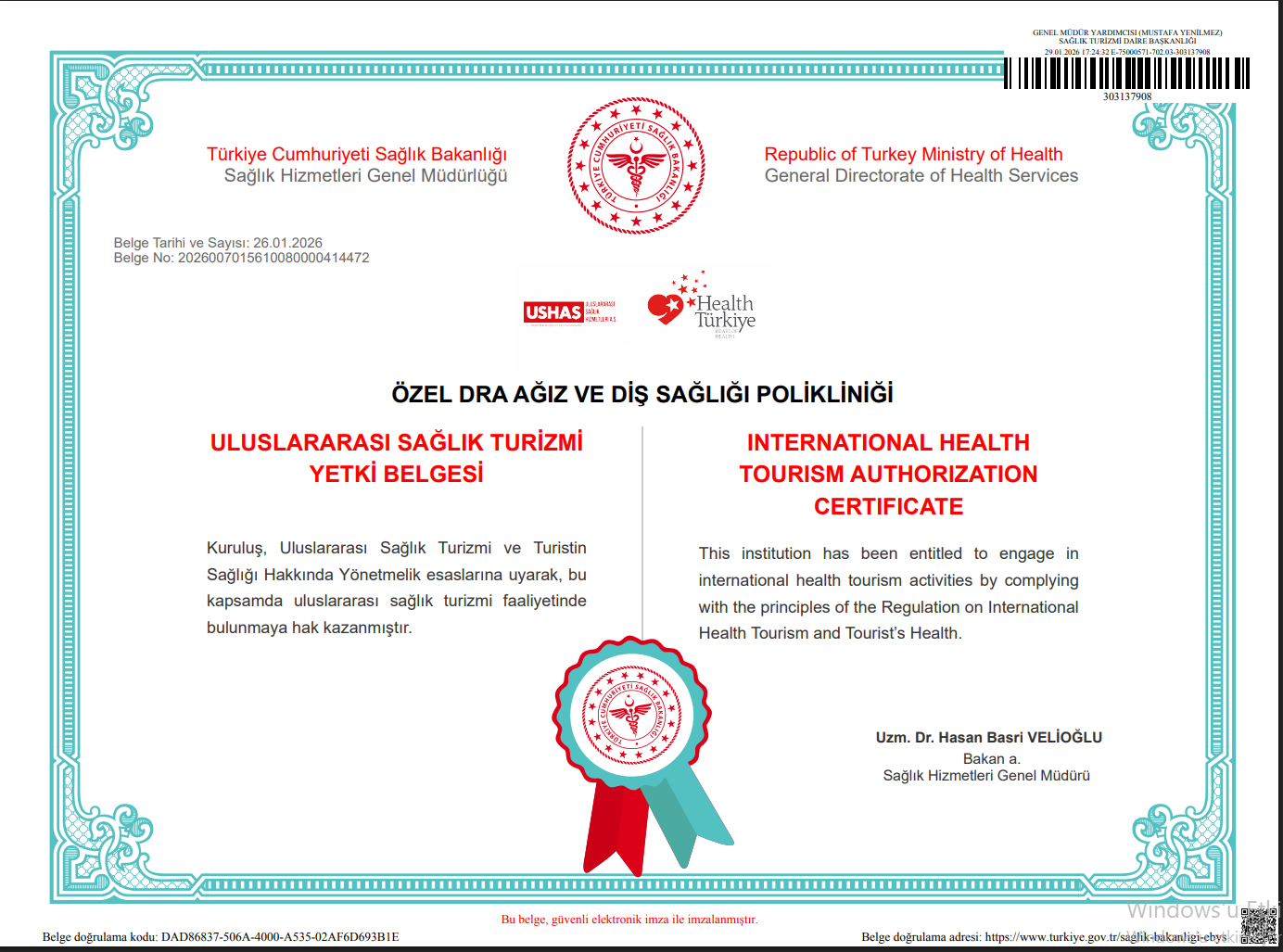
Part of Türkiye's Official Health Tourism Program

Ministry of Health Authorization Certificate
A Realistic Picture
Heart disease or high blood pressure changes some of the details of your treatment plan, but for most patients whose condition is under control, it doesn’t change whether implants are a realistic option. What matters is an honest conversation about your specific condition and medication, coordination with your existing medical care where it’s needed, and a plan based on your case rather than an assumption either way.
Send your case details via WhatsApp, or get in touch for a direct, case-specific conversation before you commit to travelling.