
A history of gum disease doesn’t automatically rule out dental implants, and treating it properly first is usually the deciding factor rather than the diagnosis itself. There’s a genuine, measurable gap in outcomes between patients with treated periodontal disease and those without it — but the gap is smaller than a lot of patients assume, and it’s manageable. Here’s what the research shows.
Key Takeaways
- Implant survival in patients with a history of treated periodontitis still ranges from 90% to 97% across published studies
- Peri-implantitis risk is higher in patients with a periodontal history, but the deciding factor is whether the disease is controlled first
- Implant placement is possible once gum disease is stable, not automatically excluded because of a past diagnosis
- DRA Dental assesses your case individually via a Day 1 panoramic X-ray, not a blanket rule based on history alone
- Ongoing oral hygiene is one of the most useful things within your control after treatment
What the Research Shows
A systematic review and meta-analysis covering 8 to 10 studies with follow-up periods between two and sixteen years found that implant survival is 1.7 times higher in periodontally healthy patients than in those with a history of periodontitis, according to a systematic review and meta-analysis published via PubMed Central. Individual studies within that review reported survival rates ranging from 90% to 97.3% in patients with a treated periodontal history — meaningfully lower than in healthy patients, but still a solid outcome for most people.
The same review found peri-implantitis, an infection around the implant, occurs roughly 4.8 times more often in patients with a periodontal history, with aggressive periodontitis carrying about six times the risk and chronic periodontitis around 4.6 times. The review’s own conclusion was direct: implant placement is possible in patients with a history of periodontitis once the disease is well controlled and stabilized, though the risk of implant-related problems stays somewhat higher than in patients who never had gum disease.
In plain terms: the distinction that matters isn’t gum disease versus no gum disease, it’s treated versus untreated. That nuance rarely comes through in generic online advice, which tends to treat any periodontal history as an automatic disqualifier.
Why Gum Health Matters for Implant Success
Periodontal disease reflects an existing vulnerability to bacterial buildup and inflammation around teeth, and that same vulnerability can transfer to the tissue surrounding an implant once it’s placed. Peri-implantitis is essentially the implant equivalent of gum disease — bacterial inflammation around the implant that, left unmanaged, can affect the bone supporting it. This is why a periodontal history raises the stakes for consistent aftercare rather than closing off treatment altogether.
Louise, a 54-year-old from Bristol who had been treated for chronic gum disease a few years earlier, had been told by her local dentist that implants “probably weren’t realistic” for her without much further explanation. When she messaged our dental team via WhatsApp, they asked about her current gum health and how long it had been stable, rather than ruling her out on the history alone, and after her Day 1 assessment confirmed healthy, stable tissue, she went ahead with treatment.
Treating Gum Disease Before Implants
If gum disease is still active, addressing it first is the standard approach rather than placing an implant into tissue that’s still inflamed. DRA Dental’s Gum Design service includes therapeutic periodontal pocket reduction, which can be part of getting your gum health to a stable starting point before any implant planning begins.
Not sure where your gum health currently stands for treatment purposes? Send your case details via WhatsApp, and our dental team will talk through what we need to know before you book anything.
What DRA Dental Does for Patients With a History of Gum Disease
A past periodontal diagnosis isn’t an automatic barrier to treatment at DRA Dental. Our approach:
- Day 1 panoramic X-ray, reviewed by our dental team before any surgical step, to assess bone and tissue condition directly
- A direct conversation about your gum health history, rather than a blanket policy based on a past diagnosis alone
- A written treatment plan reflecting your specific case
- WhatsApp aftercare, useful for flagging any unusual swelling or discomfort during healing, which matters more given the higher peri-implantitis risk in this group
Results may vary based on individual assessment, and that assessment, not your history alone, is what shapes your treatment plan.
Practical Steps If You Have a History of Gum Disease and Want Implants
A few habits genuinely improve your odds, alongside any periodontal treatment already completed:
- Maintain excellent oral hygiene going forward, since this is one of the few factors fully within your control and directly affects peri-implantitis risk
- Mention your periodontal treatment history and how long your gums have been stable, since this context shapes your Day 1 assessment
- Keep up with regular dental cleanings, both before and after your implant treatment
- Attend every follow-up, so any early sign of inflammation is caught and addressed quickly rather than left until your next scheduled visit
None of these guarantee a specific outcome, but each one supports the same tissue stability that implant success depends on.
Frequently Asked Questions
Can you get dental implants if you’ve had gum disease?
Yes. Research shows implant survival in patients with treated periodontal disease still ranges from 90% to 97%, and placement is possible once the disease is controlled and stabilized rather than automatically excluded because of a past diagnosis.
Do I need to treat gum disease before getting implants?
If gum disease is currently active, yes — treating it first is the standard approach. DRA Dental’s Gum Design service includes therapeutic periodontal pocket reduction as part of getting to a stable starting point.
Does a history of gum disease increase the risk of implant problems later?
It does raise peri-implantitis risk, roughly 4.8 times higher according to published research, which is why consistent oral hygiene and regular follow-up matter more for patients with this history.
Will DRA Dental ask about my gum health before treatment?
Yes, always. Our dental team will discuss your periodontal history as part of your case review, alongside your Day 1 panoramic X-ray.
Does it matter if my gum disease was mild or more advanced?
The research generally shows a bigger risk gap for aggressive periodontitis than for chronic (milder) periodontitis, though both carry some elevated risk compared to no history at all. Your specific case is assessed individually rather than assumed from the general category.
Where is DRA Dental Clinic located?
DRA Dental Clinic is located in Kundu, Lara Beach, Antalya, Turkey.



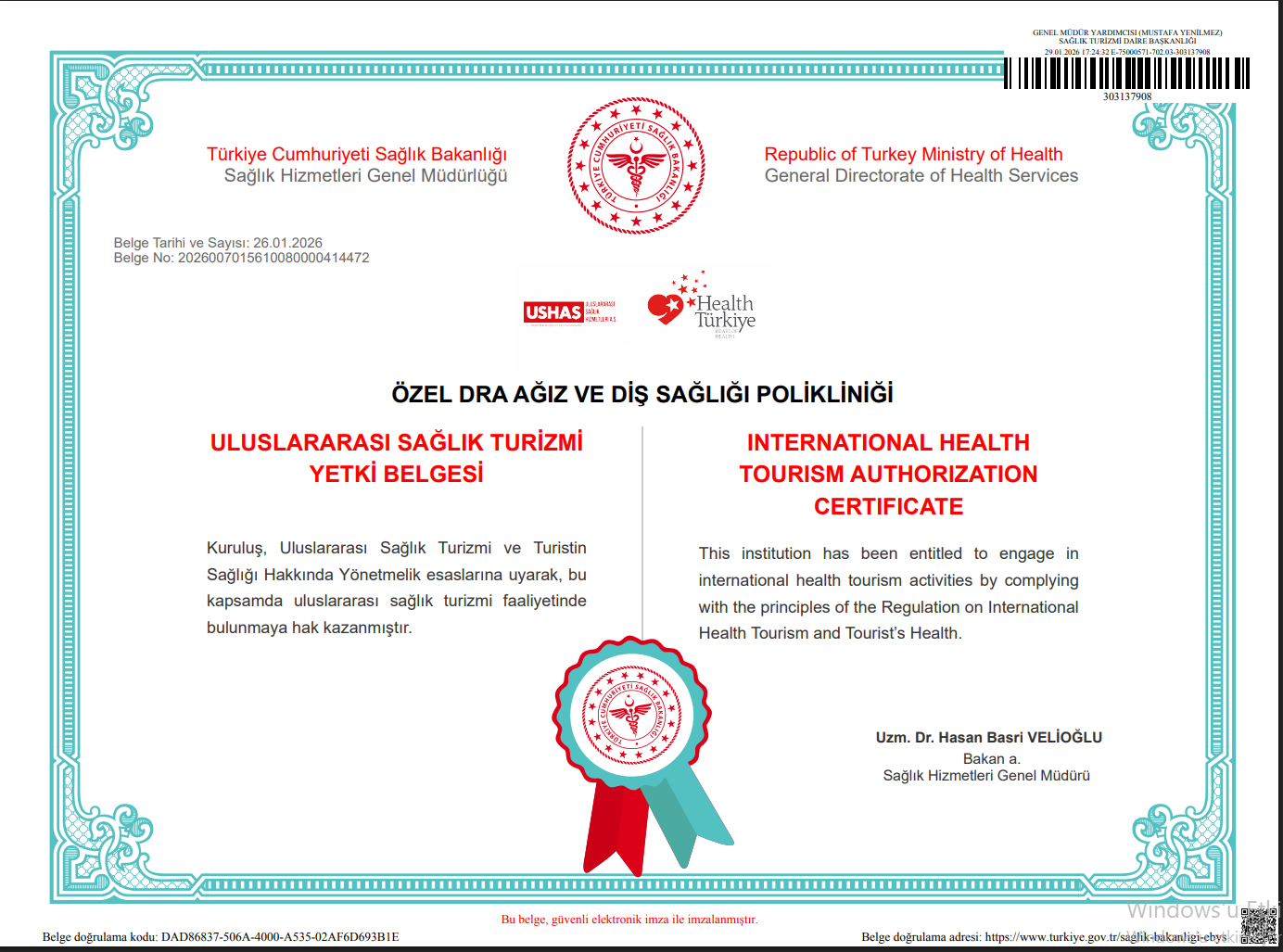
Part of Türkiye's Official Health Tourism Program

Ministry of Health Authorization Certificate
A Realistic Picture
A history of gum disease doesn’t close the door on dental implants, and the research supports that clearly once the underlying disease is treated and stable. What matters is an open conversation about where your gum health actually stands, followed by a proper Day 1 assessment rather than a decision made on assumptions either way.
Send your case details via WhatsApp, or get in touch for a direct, case-specific conversation before you commit to travelling.