
Implant failure is uncommon, and when it does happen, it’s rarely the dead end patients picture. There’s a clear process for what comes next, and a solid chance of a successful replacement. Here’s what actually happens, not the worst-case version that tends to circulate online.
Key Takeaways
- The overall dental implant failure rate is around 2.21% in large-scale studies
- Most failures happen early, during the healing period, rather than years later
- A failed implant can usually be removed, the site allowed to heal, and a new implant placed
- Replacement implants succeed in the large majority of cases, though slightly less often than a first attempt
- DRA Dental reassesses your case individually if this happens, rather than treating it as a closed door
What the Research Shows
A large-scale registry study tracking 158,824 implants placed across nearly 54,000 patients found an overall failure rate of 2.21%, with early failure during the osseointegration period — before the crown is even fitted — accounting for 1.56% of that figure, according to a large-scale registry study published via PubMed Central. Early failures were roughly twice as common as late failures, and the highest concentration of failures occurred within the first year, dropping off after that.
That pattern matters for how to think about this. Most implant failures aren’t a slow decline that catches patients off guard years down the line — they tend to happen during the healing window your dental team is already actively monitoring, when a problem can be identified and addressed relatively early.
The Removal and Healing Process
If an implant fails to integrate properly, the process is more straightforward than it sounds. Removal is broadly similar to a tooth extraction, using tools designed specifically for implants. Any gum or bone treatment needed at the site is addressed, and the area is given time to heal before the next step is planned.
Daniel, a 47-year-old from Manchester, had an implant fail to integrate during the healing period after his first visit. He messaged our dental team via WhatsApp, worried it meant his treatment was over. Instead, they explained what had happened, removed the implant, let the site heal, and reassessed at his next visit — he went on to have a successful replacement implant placed several months later.
Can a Failed Implant Be Replaced?
Usually, yes. A study following patients who had a failed implant replaced at the same site found a 1-year survival rate of 89.4% for the replacement implant, according to a retrospective study published via PubMed Central. That’s a real, still-strong outcome — somewhat lower than the success rate for a first-time implant, but far from a coin flip.
The same study found that timing didn’t make a meaningful difference: replacing the implant immediately versus waiting longer produced similar outcomes. What mattered more was patient-specific factors like smoking and general health, which is consistent with what the research shows across implant treatment more broadly — the individual case matters more than the fact that a previous attempt didn’t succeed.
What DRA Dental Does If an Implant Doesn’t Integrate
An implant failing to integrate isn’t treated as a closed door at DRA Dental. Our approach:
- A direct, honest conversation about what happened and why, based on your specific case
- Individual reassessment, including a fresh panoramic X-ray, before any decision about a replacement
- An updated written treatment plan reflecting your situation, not a standard next step applied to everyone
- WhatsApp support throughout, so you’re not left waiting for answers
To be clear about scope: DRA Dental’s ten-year guarantee covers zirconia and E-max crowns, veneers, and dental implants (composite bonding is the one exception, due to its shorter lifespan). If an implant doesn’t integrate, that guarantee is what your dental team works from while reassessing your specific situation and next steps.
Practical Steps to Reduce Your Risk
A few things genuinely lower the odds of this happening in the first place, and support a smoother outcome if it does:
- Follow aftercare guidance closely during the healing period, since this is when most failures occur and early attention makes the biggest difference
- Mention any changes in your health honestly, since factors like smoking status or blood sugar control affect healing
- Attend every follow-up, so any early sign of a problem is caught quickly
- Maintain excellent oral hygiene, both during initial healing and long after
None of these guarantee a specific outcome, but each one supports the same healing process implant success depends on.
Frequently Asked Questions
How common is dental implant failure?
Uncommon. Large-scale studies put the overall failure rate at around 2.21%, with most failures occurring early, during the healing period, rather than years after treatment.
What happens if my implant fails during healing?
The implant is removed, similar to a tooth extraction, and the site is given time to heal before your dental team reassesses and discusses a replacement.
Can a failed implant be replaced with a new one?
Usually, yes. Research shows replacement implants succeed in roughly 9 out of 10 cases at the one-year mark, a strong outcome even though slightly lower than a first-time implant’s success rate.
Does it matter how soon the replacement is placed?
Not significantly. Studies show similar outcomes whether the replacement is placed immediately or after a longer healing period. Your dental team will recommend timing based on your specific case.
Is implant failure covered by DRA Dental’s guarantee?
Yes. DRA Dental’s ten-year guarantee covers zirconia and E-max crowns, veneers, and dental implants (composite bonding is the exception). If an implant doesn’t integrate, our dental team reassesses your case and works from that guarantee to agree on next steps.
Where is DRA Dental Clinic located?
DRA Dental Clinic is located in Kundu, Lara Beach, Antalya, Turkey.



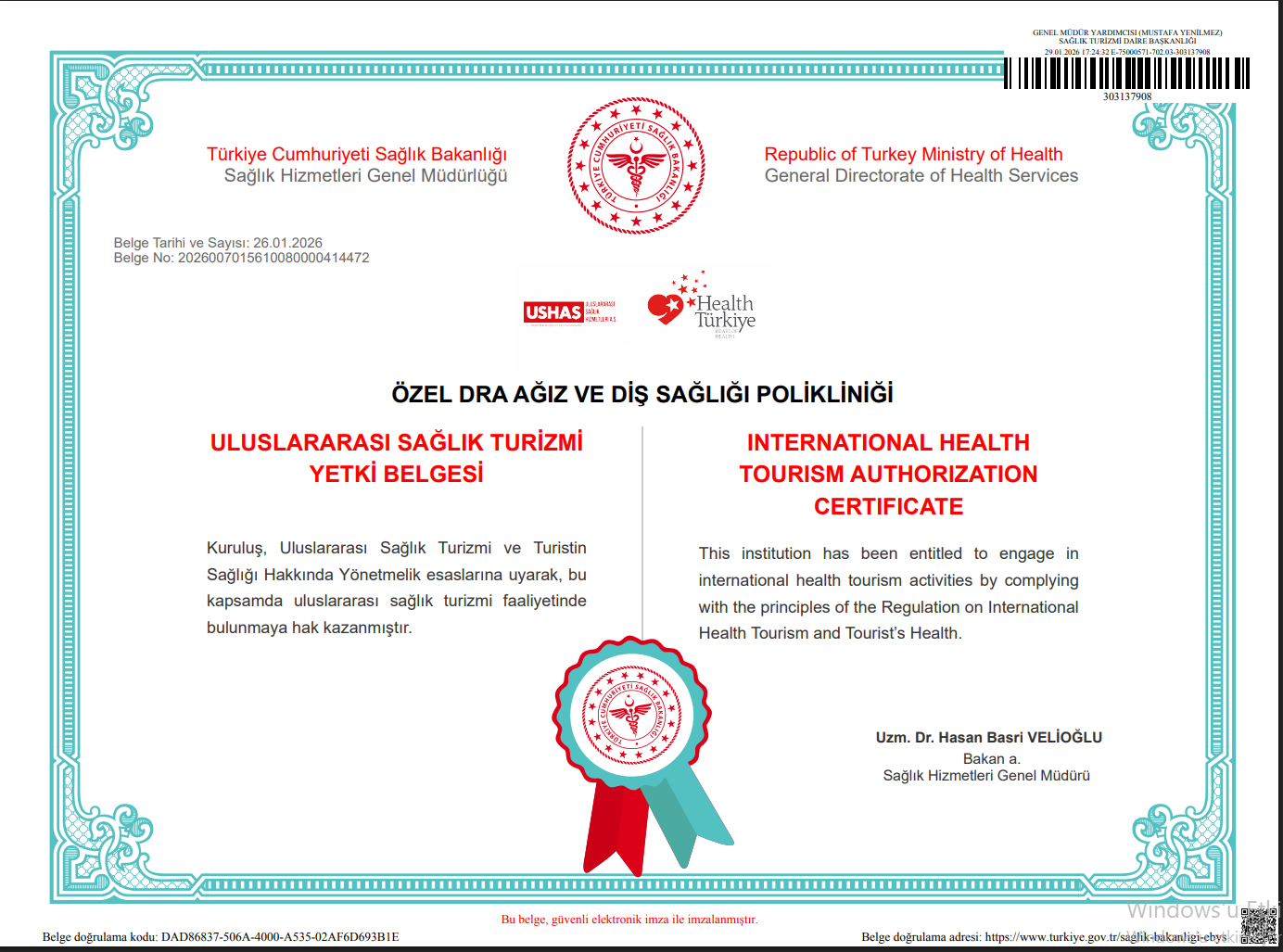
Part of Türkiye's Official Health Tourism Program

Ministry of Health Authorization Certificate
A Realistic Picture
Implant failure is uncommon, and when it does happen, it’s usually caught early and followed by a clear path forward rather than a dead end. What matters is an honest conversation about what happened, a proper reassessment, and a plan based on your specific case rather than assumptions either way.
Send your case details via WhatsApp, or get in touch for a direct, case-specific conversation before you commit to travelling.