
Yes, most patients fly home safely on schedule after dental implant surgery, and at DRA Dental that schedule is built around a fixed five-day trip, not an open-ended guess. Swelling and mild discomfort are normal in the days after implant placement, but for most patients they’re a comfort issue on the flight home, not a safety one. Here’s exactly what determines whether you fly on time, and what could change that.
Key Takeaways
- Most patients fly home on Day 5 as planned, following DRA Dental’s standard implant protocol
- Swelling peaks at 48–72 hours after surgery, which is why the extra days before departure matter
- Cabin pressure changes can add discomfort, not danger, for a healing implant
- Sinus lift cases may need a slightly longer runway before flying — confirmed by your dental team, not guessed
- Your second visit (permanent crown fitting) is far less invasive, with minimal flying restrictions
How Soon Can You Fly After Dental Implant Surgery?
For a single, straightforward dental implant, many patients could technically fly within just a few days. At DRA Dental, this isn’t something you have to work out for yourself. Your trip is already structured around a five-day first visit: surgery happens early in the week, and your flight home on Day 5 falls after the swelling peak (48–72 hours) and past the highest-risk window of early healing for a standard implant placement. Sinus lift cases are the main exception worth flagging, covered in more detail below.
Tom, a 52-year-old from Bristol, had two implants placed on Day 1 of his visit in 2026. He’d read online that some patients wait two weeks before flying and assumed he’d need to extend his stay. When our dental team walked him through the five-day schedule and explained why Day 5 was already timed past the highest-risk swelling window, he flew home as originally booked, with no changes to his return ticket.
Why Swelling and Cabin Pressure Matter (It’s Comfort, Not Danger)
Swelling after implant surgery typically peaks around 48 to 72 hours, then begins to settle, a pattern confirmed by NHS aftercare guidance on dental implants. This is a normal, expected part of healing, not a sign anything has gone wrong. Cabin pressure changes during a flight can make swelling or soreness more noticeable for a short period, similar to how altitude affects sinus pressure during a cold.
This is a comfort factor, not a medical danger, for the vast majority of patients. It’s the reason dental teams build in a few days before flying rather than sending patients straight from the surgical chair to the airport. If you’re prone to ear or sinus discomfort when flying under normal circumstances, that same sensitivity may be slightly more noticeable in the days right after surgery.
Want to know what to expect for your specific case? Send your details via WhatsApp, and our dental team can talk you through your timeline before you book flights.
What Could Extend Your Wait: Sinus Lift Cases
Most implant placements don’t change the standard Day 5 departure. The exception is upper-jaw cases where a sinus lift is needed to support the implant, which our dental team can confirm is necessary after reviewing your Day 1 panoramic X-ray. Sinus lifting is available for upper jaw cases with insufficient bone depth, and because it involves the sinus cavity directly, flying comfort can be affected slightly more than with a standard implant placement.
This isn’t something you’ll be left to guess about. If a sinus lift is part of your treatment, our dental team will tell you clearly whether it changes your departure timing, based on your specific case rather than a generic rule. For most patients, even sinus lift cases still fly home within the standard trip window; a small number may be advised to add a short buffer.
Rachel, a 39-year-old from Cardiff, needed a sinus lift alongside her implant in 2026. Rather than assuming this meant a longer trip by default, she asked our dental team directly during her Day 1 consultation. They confirmed her case didn’t require any change to her flight, and she left as scheduled with clear guidance on what to expect on the plane.
What About Flying Home After Your Second Visit (Crown Fitting)?
Dental implants are a two-visit treatment: the fixture is placed at Visit 1, then, after three to six months of healing at home, you return for Visit 2 to have your permanent crown fitted. This second visit is a much less invasive appointment than the surgical placement, and flying restrictions around it are minimal to none for most patients.
Some mild sensitivity around the crown fitting itself is normal, but there’s no equivalent swelling peak to plan around the way there is after the initial surgery. Most patients fly home from Visit 2 without any special timing considerations at all.
Tips for a More Comfortable Flight After Implant Surgery
A few simple habits make the flight home noticeably easier, even within the standard schedule:
- Stay hydrated. Cabin air is dry, and hydration supports healing generally.
- Time your pain relief. If you’ve been given painkillers, taking them ahead of a flight, rather than waiting until discomfort builds, keeps things more manageable.
- Stick to soft foods for travel day. Anything that doesn’t require heavy chewing is a more comfortable choice for the journey.
- Chew gum or swallow during descent if you notice ear pressure, the same trick that helps with ordinary flight discomfort.
- Avoid alcohol on the flight home. It can interact with medication and isn’t ideal for healing tissue.
None of these are strict rules, just practical habits that make an already-safe flight home more comfortable.
Frequently Asked Questions
Is it dangerous to fly with new dental implants?
No. For the vast majority of patients, flying after implant placement is a comfort consideration, related to swelling and cabin pressure, rather than a safety risk. Your dental team will flag the rare cases where extra caution is needed, such as a sinus lift.
How many days after implant surgery is it safe to travel?
At DRA Dental, the standard five-day trip is already timed so your flight home falls after the 48–72 hour swelling peak. Most patients need no extra days beyond the standard schedule.
Does cabin pressure affect a healing implant itself?
Cabin pressure changes can make swelling or soreness feel more noticeable for a short time, but they don’t affect the implant’s healing or integration with the jawbone.
Can I fly the same day as my implant surgery?
This isn’t part of DRA Dental’s standard protocol. The five-day trip structure is designed specifically to give initial healing time to settle before you travel home.
Is a connecting flight harder on a healing implant than a direct one?
Longer total travel time and extra pressure changes from a connecting flight can make swelling feel slightly more noticeable, but it isn’t a safety concern. If your journey home involves a connection, mention it to our dental team so they can factor it into your guidance.
Where is DRA Dental Clinic located?
DRA Dental Clinic is located in Kundu, Lara Beach, Antalya, Turkey.



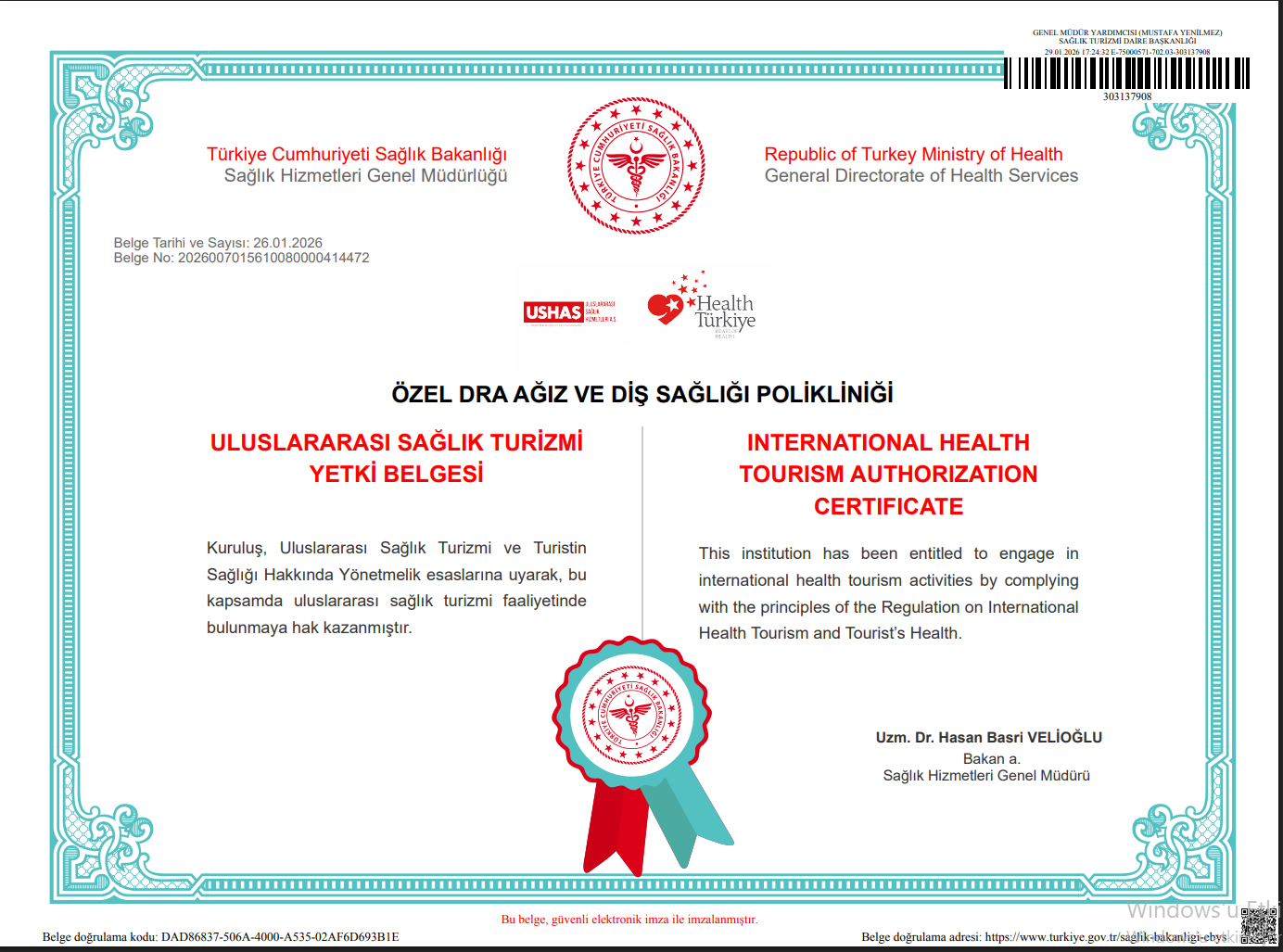
Part of Türkiye's Official Health Tourism Program

Ministry of Health Authorization Certificate
Flying Home With Confidence
The honest answer to “can you fly after dental implant surgery” is yes, on the timeline your dental team confirms for your case, not a generic number pulled from a forum thread. At DRA Dental, that timeline is already built into the standard five-day trip, so for most patients there’s nothing extra to plan for beyond the itinerary you already have. Results may vary based on individual assessment, which is exactly why your Day 1 X-ray and consultation, not a blanket rule, determine your specific guidance.
Send your case details via WhatsApp, or get in touch for a written treatment plan that includes exactly what to expect around your flight home.