
Dental implant complications, peri-implantitis, failed osseointegration, nerve or sinus involvement, and mechanical issues with the crown, are a real, documented part of implant dentistry wherever implants are placed, not something unique to having treatment in Turkey. Published survival data puts implant success at over 95% at ten years, which means a small percentage of cases do involve some form of complication, in Turkey, the UK, or anywhere else. This guide explains what those complications actually are, how likely they are, and what our dental implant team does at every stage to reduce the risk.
Key Takeaways
- Implant complications are a normal part of implant dentistry everywhere; published data shows over 95% survival at ten years, meaning a small percentage of cases involve some form of complication
- The main categories are peri-implantitis (infection), failed osseointegration, nerve or sinus proximity issues, and mechanical problems with the crown or abutment
- Most complications are linked to identifiable risk factors, smoking, uncontrolled diabetes, poor oral hygiene, or untreated bruxism, not to where the implant was placed
- DRA Dental assesses bone structure and nerve position with a Day 1 panoramic X-ray before any surgery, and provides WhatsApp aftercare if anything needs attention after you return home
- Results may vary based on individual assessment; send your X-rays or photos via WhatsApp for a case review before you book
How Common Are Dental Implant Complications in Turkey and Elsewhere?
Implants are one of the most well-studied procedures in modern dentistry, and the data is reassuring rather than alarming. A frequently cited long-term study published via PubMed puts implant survival at over 95% at the ten-year mark. That figure sits behind most “how long do dental implants last” claims you’ll see, including on our own guide to dental implant longevity.
A 95% survival rate is good news, but it isn’t 100%. Read the other way, it means a small number of implants, wherever they’re placed, develop a complication serious enough to need attention or, in rare cases, replacement. That’s true of implants placed in London, Los Angeles, or Antalya. The procedure carries the same biological risks regardless of the country on the clinic’s address.
Sarah, a 47-year-old teacher from Leeds, spent weeks reading forum threads about dental implant horror stories before her consultation in 2026. What she found in the clinical literature, once she got past the anecdotes, was that most reported implant complications trace back to a handful of specific, identifiable factors, not to geography. That distinction changed how she approached her own decision: she asked her clinic directly what they do to manage each of those specific risks, rather than treating “abroad” itself as the risk factor.
Common Risks at a Glance
If you’re specifically researching the common risks associated with dental implants, here’s the short version before the detailed breakdown below:
- Peri-implantitis — infection around the implant, the most commonly reported long-term risk
- Failed osseointegration — the implant not fusing properly with the jawbone
- Nerve proximity and sinus involvement — anatomical risks specific to implant placement location
- Mechanical complications — issues with the crown or abutment after placement
Peri-Implantitis (Infection Around the Implant)
Peri-implantitis is inflammation and bone loss around an implant, caused by a bacterial infection similar to gum disease around natural teeth. It’s the most commonly reported long-term implant complication in the clinical literature, with a systematic review and meta-analysis published via PubMed estimating prevalence at roughly 9% at the implant level and 20% at the patient level across studies reviewed.
Main causes:
– Poor oral hygiene around the implant site
– Smoking, which significantly increases infection risk
– Missed follow-up cleaning appointments
Peri-implantitis is largely preventable with consistent oral hygiene and regular check-ups, and it’s usually caught early if a patient reports gum tenderness, bleeding, or swelling around an implant rather than waiting for it to progress. Early-stage peri-implantitis is manageable and does not automatically mean implant failure, which is why it can appear as a percentage in prevalence studies while implant survival itself still sits above 95% at ten years: most cases are identified and treated before they threaten the implant. Left untreated for a long period, however, it can eventually threaten the implant itself.
Failed Osseointegration
Osseointegration is the process by which the jawbone fuses to the titanium implant fixture over roughly three to six months. Occasionally, this fusion doesn’t fully succeed, most often linked to:
- Insufficient bone density or volume at the implant site
- Smoking, which measurably reduces bone healing capacity
- Uncontrolled diabetes
- Excessive load on the implant too early in healing
This is exactly why a proper pre-surgical assessment matters. At DRA Dental, every implant patient has a panoramic X-ray on Day 1, reviewed by our dental team before any surgical step is taken, to confirm bone structure is suitable for the planned implant. Sinus lifting is available for upper jaw cases where bone depth is limited. Results may vary based on individual assessment, which is exactly why this review happens before treatment, not after.
Nerve Proximity and Sinus Involvement
In the lower jaw, implants are planned with awareness of the inferior alveolar nerve’s position; placing an implant too close can, in rare cases, cause temporary or, very rarely, lasting numbness or altered sensation in the lip or chin. In the upper jaw, the sinus cavity sits close to the back molar roots, which is why sinus involvement is a factor in upper-jaw implant planning.
Neither of these is a reason to be alarmed, they’re simply anatomical realities that any competent implant team plans around. The panoramic X-ray taken on Day 1 gives our dental team a clear view of nerve position and sinus floor before implant placement is confirmed, and treatment planning is adjusted accordingly, including sinus lifting where the upper jaw needs additional support.
Mechanical Complications (Crown or Abutment Issues)
Once an implant has integrated, the visible part, the crown, can still develop mechanical issues over time: loosening of the abutment screw, or in rarer cases a chipped or fractured crown. The single biggest contributing factor here is untreated bruxism (teeth grinding), which places repeated excess force on the restoration.
Mike, a patient from Manchester who had two implants placed in early 2026, mentioned during his consultation that he’d been told years earlier he ground his teeth at night but had never done anything about it. Our dental team recommended a custom night guard alongside his implant treatment specifically to protect the new crowns from that ongoing pressure, a small addition that meaningfully reduces the risk of exactly this kind of mechanical complication.
Want to know if your case has any specific risk factors? Send your X-rays or a description of your dental history via WhatsApp, and our team will review it and flag anything relevant before you travel.
What DRA Dental in Turkey Does to Reduce These Risks
None of the categories above are unique to Turkey, and none of them are eliminated entirely by any clinic anywhere. What differs between clinics is how seriously each risk is assessed and managed before, during, and after treatment. At DRA Dental Clinic:
- Day 1 panoramic X-ray for every implant patient, reviewed before any surgical step
- Osstem implants as standard (other implant brands can be arranged if you have a preference, just tell our team) — Osstem is CE-marked and FDA-approved with a wide clinical track record
- Sinus lifting available for upper jaw cases with insufficient bone depth
- A written treatment plan confirming your specific case assessment before any procedure begins
- Ten-year guarantee on smile design restorations (zirconia crowns, E-max crowns, and veneers) placed alongside implant treatment; the guarantee applies to those restorations rather than to implant fixtures themselves, which are backed instead by the published survival data referenced above
- WhatsApp aftercare, available after you return home
Results may vary based on individual assessment. This is why the Day 1 review, not a generic quote, is what actually determines your treatment plan.
What Happens If a Complication Occurs After You Return Home
This is usually the real question behind “is it risky to get implants abroad”, not the procedure itself, but what happens if something needs attention once you’re back in the UK. The UK’s General Dental Council advises patients considering treatment abroad to ask plenty of questions before committing and to understand what aftercare is available once they’re home, which is exactly the kind of transparency this section is meant to provide.
At DRA Dental, our team remains available by WhatsApp after you return home. If you notice swelling, discomfort, or anything unusual around an implant site, you can send photos or describe symptoms directly to our clinical team, who will advise whether it’s a normal part of healing or something that needs a closer look. For anything requiring hands-on review, we arrange a follow-up appointment within the guarantee period at no extra charge for restorations covered by the ten-year guarantee.
You also receive an implant passport after treatment, documenting the exact implant brand and details used. If you ever need to see a dentist locally in the UK for any reason, that document means any dentist can identify precisely what was placed and plan accordingly, rather than working from guesswork.
Ready to get a written, case-specific risk assessment before you book? Get in touch with your X-rays or photos, and we’ll give you a clear picture of your case, no obligation.
Frequently Asked Questions
What are the most common dental implant complications?
The most commonly reported complications are peri-implantitis (infection around the implant), failed osseointegration, and mechanical issues with the crown or abutment, usually linked to untreated teeth grinding. All of these are well-documented in implant dentistry generally, not specific to any one country.
Are dental implant complications more likely in Turkey?
No published clinical evidence shows implant complications occurring at a higher rate in Turkey specifically. Complication risk is linked to individual factors, bone quality, smoking, diabetes control, oral hygiene, and bruxism, along with the assessment and planning done by the treating clinic, rather than to geography.
What increases my risk of implant complications?
The main risk factors identified in the clinical literature are smoking, uncontrolled diabetes, poor oral hygiene, insufficient bone volume, and untreated bruxism. A thorough pre-surgical assessment, including a panoramic X-ray, is designed to identify these factors before treatment begins.
Can implant complications be treated after I return home?
Many concerns can be assessed remotely through photos or a description sent via WhatsApp to our clinical team, who can advise whether follow-up is needed. For anything requiring a hands-on review, we arrange a follow-up appointment within the guarantee period.
What questions should I ask a clinic about implant complications before I book?
Ask specifically what pre-surgical assessment is done (and with what imaging), what happens if a complication is identified after you return home, and whether follow-up appointments are included or charged separately. The UK’s General Dental Council recommends asking exactly these kinds of questions before committing to treatment abroad.
Where is DRA Dental Clinic located?
DRA Dental Clinic is located in Kundu, Lara Beach, Antalya, Turkey.



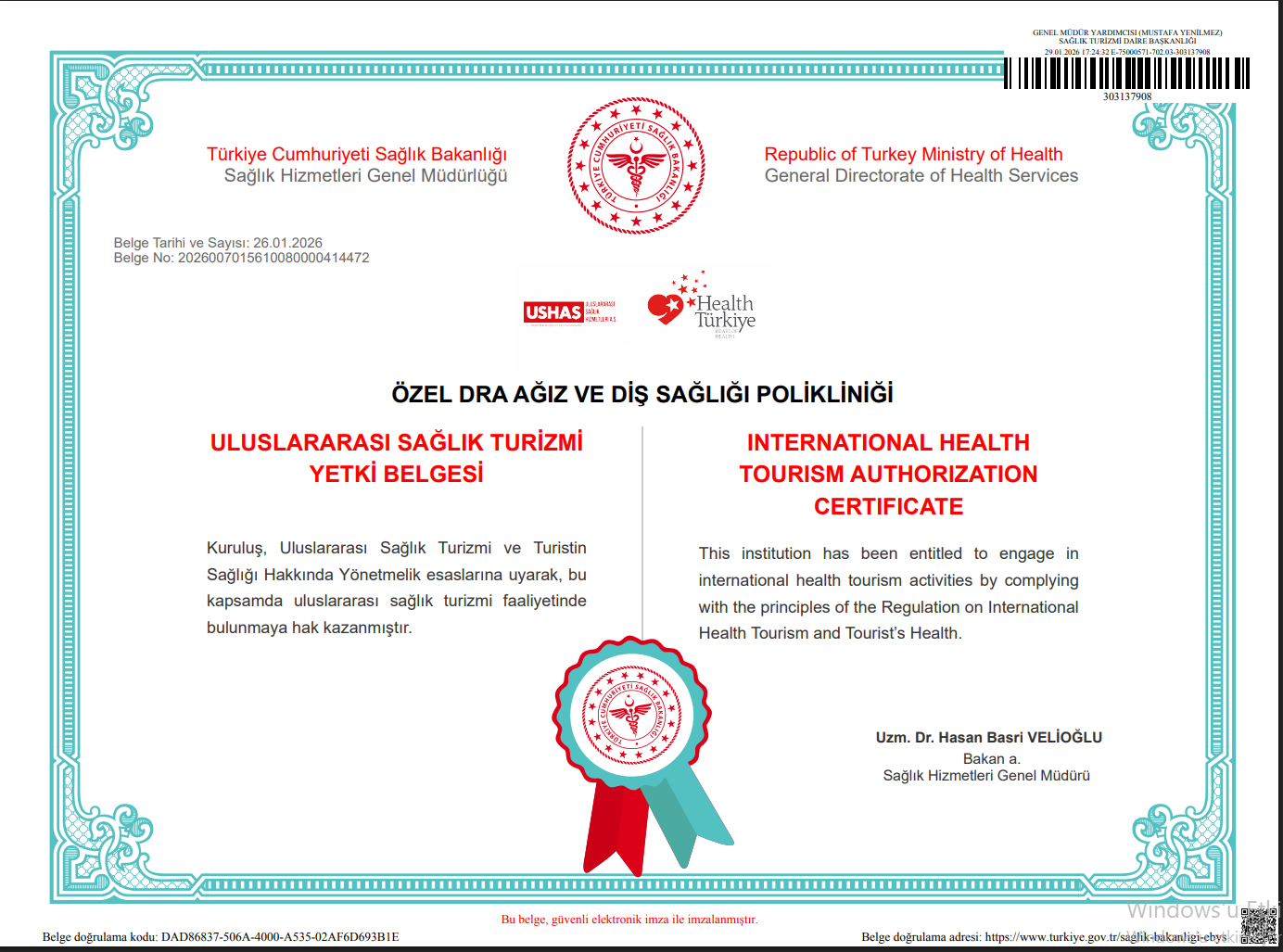
Part of Türkiye's Official Health Tourism Program

Ministry of Health Authorization Certificate
The Honest Picture
Dental implant complications are real, well-documented, and worth understanding, but they are not a reason to rule out treatment abroad specifically, since the same risks and the same published survival rates apply wherever implants are placed. What actually matters is whether the clinic you choose properly assesses your bone structure and dental history before surgery, uses a reputable implant brand, and stays reachable if anything needs attention after you travel home.
At DRA Dental, every implant case starts with a Day 1 panoramic X-ray and a written treatment plan, not a generic quote. If you’d like an honest, case-specific view of your own risk factors before committing to travel, send your X-rays or photos via WhatsApp, or book a video consultation, and our team will talk you through exactly what we see. You can also read what our patients say about their experience at DRA Dental, including how complications and concerns were handled in practice.