
For well-controlled diabetes, dental implants succeed at rates close to those seen in non-diabetic patients, and that’s truly good news, not a marketing line. The picture changes when blood sugar isn’t well managed, and DRA Dental would rather lay that out plainly than gloss over it either way. Here’s what the research shows.
Key Takeaways
- Well-controlled diabetes shows implant success rates comparable to non-diabetic patients in published research
- Poorly controlled diabetes is linked to significantly lower success rates and greater bone loss around the implant
- Blood sugar control plays a bigger role than the diagnosis itself in implant outcomes
- DRA Dental assesses your case individually via a Day 1 panoramic X-ray, not a blanket rule based on diagnosis
- Managing your blood sugar around your treatment window is one of the most useful things within your control
What the Research Shows
The distinction that matters most in the research isn’t diabetic versus non-diabetic, it’s controlled versus uncontrolled. A systematic review of dental implant success in diabetic patients found that when diabetes is well-managed, implant survival ranges from roughly 96–97% at one year and 87–96% at five years, comparable to non-diabetic populations, according to a systematic review published via PubMed Central. Separate research focused specifically on glycemic control found notably lower success rates and greater bone loss around implants when diabetes is poorly managed, with one narrative review reporting implant survival dropping from 100% under well-controlled glycemia to 86.3% when glycemic control was poor, according to a review published via PubMed Central.
In plain terms: diabetes itself isn’t the deciding factor. How well it’s managed is. That distinction rarely comes through in generic “can diabetics get implants” content online, which tends to lump every diabetic patient into a single higher-risk category regardless of how well their condition is managed day to day.
Why Blood Sugar Control Matters for Implant Healing
Dental implants depend on osseointegration, the process where your jawbone fuses to the titanium implant over three to six months. Elevated blood sugar (hyperglycemia) interferes with this process directly, slowing bone healing and increasing the risk of infection around the implant site. This is the same biological reason smoking affects implant success, a healing process that depends on efficient blood flow and cell repair is more vulnerable when that process is disrupted, whether by nicotine or by unmanaged blood sugar.
Karen, a 58-year-old from Manchester with type 2 diabetes, had assumed for years that implants weren’t realistic for her. She’d managed her diabetes carefully with her GP for over a decade, with consistently well-controlled blood sugar. When she messaged our dental team via WhatsApp, they explained that her situation looked very different from an uncontrolled case, and after her Day 1 assessment, she went ahead with treatment without any additional complications.
What “Well-Controlled” Means in Practice
DRA Dental isn’t in a position to run ongoing blood sugar monitoring or replace your own diabetes care team, and we don’t pretend otherwise. What “well-controlled” means in practice is a working relationship with your GP or diabetes specialist, consistent management over time rather than a single good reading, and being upfront with our dental team about where things really stand before you travel.
Not sure where your diabetes management stands for treatment purposes? Send your case details via WhatsApp, and our dental team will talk through what we need to know before you book anything.
What DRA Dental Does for Diabetic Patients
Diabetes isn’t an automatic barrier to treatment at DRA Dental. Our approach:
- Day 1 panoramic X-ray, reviewed by our dental team before any surgical step, to assess bone quality directly
- A straightforward conversation about your diabetes management, rather than a blanket policy based on diagnosis alone
- A written treatment plan reflecting your specific case
- WhatsApp aftercare, useful for flagging anything unusual during healing, which counts for more with diabetic patients given the slightly elevated infection risk
Results may vary based on individual assessment, and that assessment, not your diagnosis alone, is what shapes your treatment plan.
Practical Steps If You Have Diabetes and Want Implants
A few practical habits genuinely improve your odds, alongside the ongoing management you already do with your GP:
- Keep your diabetes management consistent in the weeks around your treatment, rather than treating your travel dates as separate from your usual routine
- Maintain excellent oral hygiene, since gum infection risk is already somewhat elevated with diabetes, and hygiene is one of the few factors fully within your control
- Mention any recent changes in your management (a new medication, a recent diagnosis, a period of poor control) to our dental team openly, since this context shapes your Day 1 assessment
- Attend every follow-up, so any early sign of a healing issue is caught and addressed quickly rather than left until your next scheduled visit
None of these guarantee a specific outcome, but each one supports the same healing process osseointegration depends on.
Frequently Asked Questions
Can diabetics get dental implants?
Yes. Well-controlled diabetes, generally defined in the research as HbA1c under 8%, shows implant success rates close to non-diabetic patients. Poorly controlled diabetes carries meaningfully higher risk, which is why individual assessment counts for more than the diagnosis itself.
Do I need to tell DRA Dental if I have diabetes?
Yes, always, before you travel. This isn’t about disqualifying you, it’s about giving our dental team an accurate picture so your treatment plan reflects your real situation.
Will DRA Dental ask for blood sugar test results before treatment?
Our dental team will discuss your diabetes management as part of your case review. Ongoing blood sugar monitoring remains with your own GP or diabetes team; our role is assessing your case honestly alongside that context.
Does diabetes affect how long an implant lasts once it’s healed?
Poorly controlled blood sugar is linked to a higher risk of complications around implants over time, which is one more reason consistent management matters beyond the initial healing period.
Does it matter if I have type 1 or type 2 diabetes?
The research generally focuses on how well blood sugar is managed rather than distinguishing sharply between type 1 and type 2 for implant outcomes specifically. What counts most in either case is consistent, well-managed control in the months around your treatment, not which type of diabetes you have.
Where is DRA Dental Clinic located?
DRA Dental Clinic is located in Kundu, Lara Beach, Antalya, Turkey.



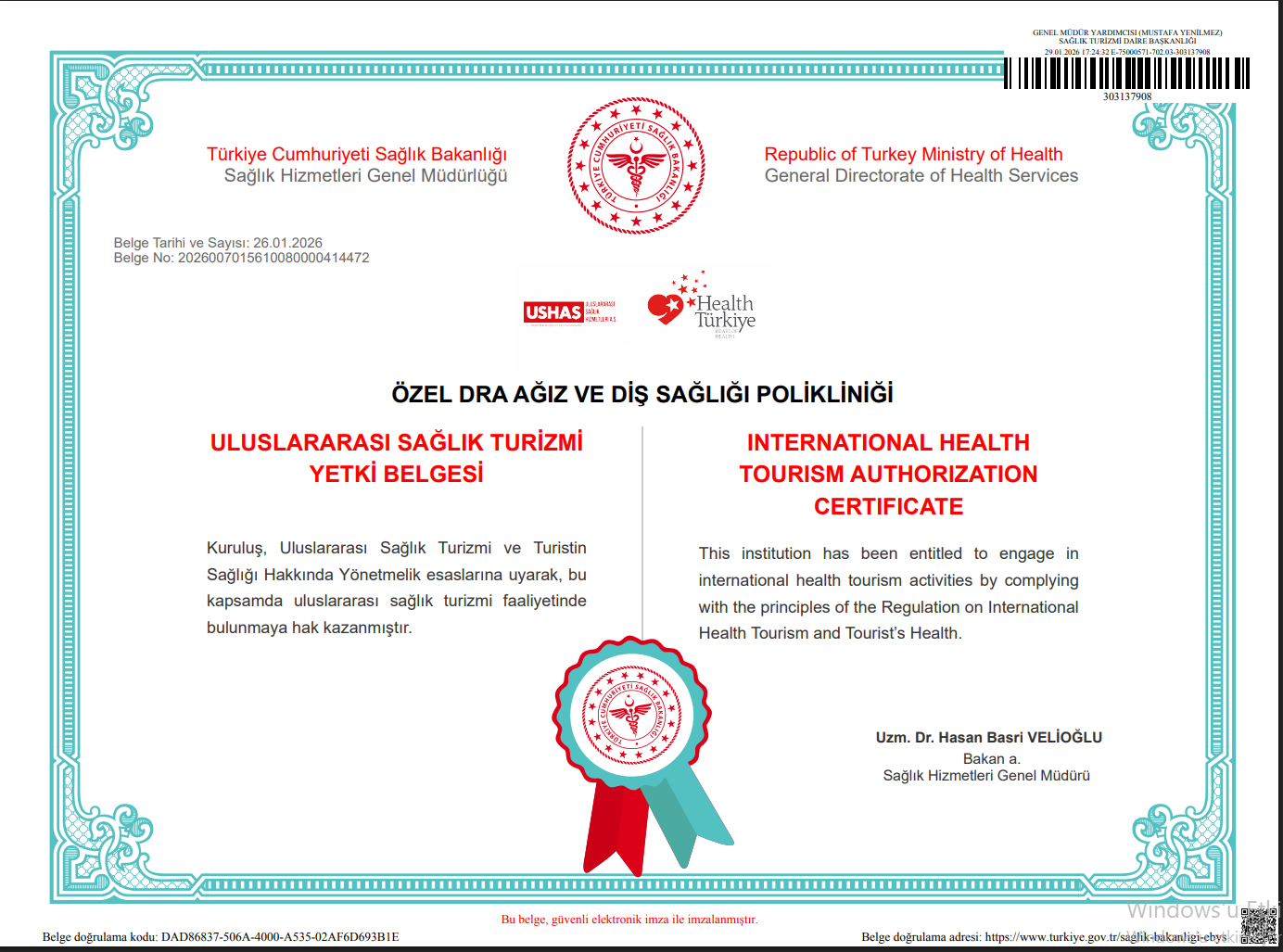
Part of Türkiye's Official Health Tourism Program

Ministry of Health Authorization Certificate
A Realistic, Honest Picture
Diabetes doesn’t automatically rule out dental implants, and the research backs that up clearly for patients whose blood sugar is well-managed. What counts is a straightforward conversation about where your diabetes management stands, followed by a proper Day 1 assessment rather than a decision made on assumptions either way.
Send your case details via WhatsApp, or get in touch for an honest, case-specific conversation before you commit to travelling.